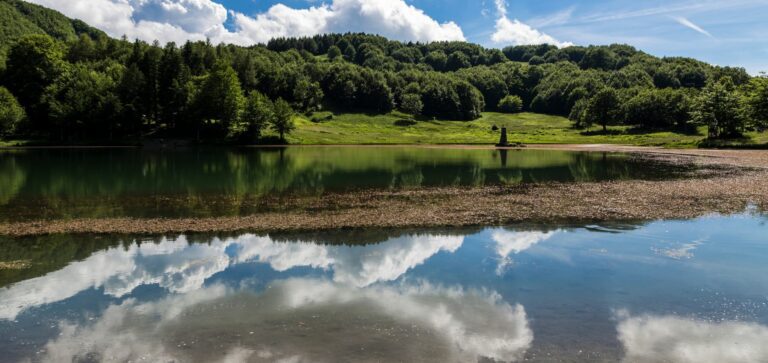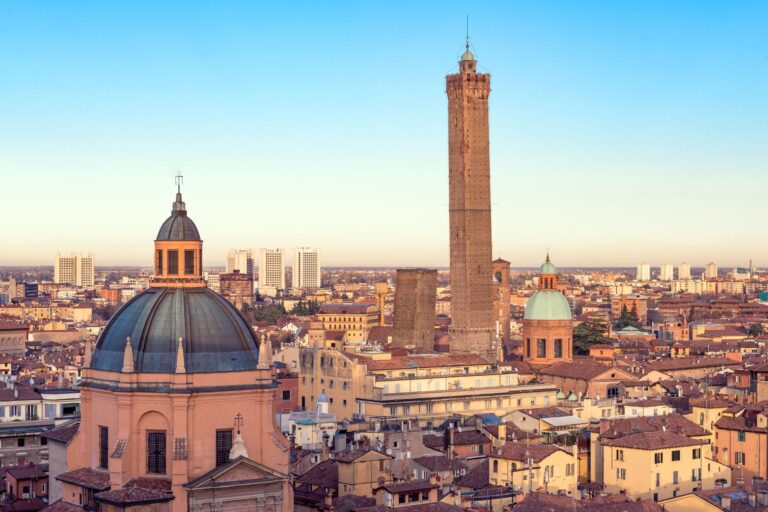
Between the plain and the first foothills of the Apennines, the province of Reggio Emilia is home to an extraordinary heritage of small towns that tell of centuries of history, art and tradition. In this article we take you to discover five villages that are absolutely worth a visit. They are all different, but they share an ability to preserve significant traces of the past and a close bond with their surrounding land.
CASTELLARANO
Perched on a sandstone hill overlooking the left bank of the Secchia River, Castellarano is an exceptional example of a fortified river village, with a large historic center in an excellent state of preservation. The settlement is documented as early as the 10th century, but it is in fact much older. The entrance to the historic center, with its evocative alleys still paved with traditional river cobblestones, is dominated by the profile of the Rocchetta, a 15th-century fortress that once gave access to the town through its three gates. Among the sights are the Rocca, whose current appearance dates from the 1970s; the Clock Tower, an ancient medieval watchtower with an 18th-century clock that has only one hand on each face; and the Church of Santa Maria Assunta, rebuilt in the 17th century in the late Baroque style on the site of an ancient parish church.
VOTIGNO DI CANOSSA
Hidden among the gentle hills of the Reggio Emilia Apennines, Votigno di Canossa is a small stone jewel that transports visitors into an almost surreal dimension. Founded in the 11th century as a fortified outpost for the soldiers of Countess Matilda of Canossa, the village was saved from abandonment by skillful and meticulous restoration work. Within its walls lies a surprising feature: the Casa del Tibet, the first center of Tibetan culture in Europe (and the only one in Italy), founded in 1990 by Reggio Emilia physician Stefano Dallari. Walking through its medieval alleys, you come across statues of the Buddha, colorful flags and spiritual symbols that coexist harmoniously with the fortified architecture of Matildic origin, creating a unique atmosphere suspended between the Emilian Middle Ages and Eastern spirituality.
SAN POLO D’ENZA
Nestled on the banks of the Enza River, San Polo d’Enza has historically been the true gateway to the Matildic lands. It was inhabited from very ancient times, as shown by the Etruscan settlement of Servirola. The village preserves significant evidence of its past and is a stop of great interest for those wishing to learn about the history of the Enza valley. The historic center is dominated by the Rocca, built in the 11th century as a defensive structure and later transformed into an elegant noble residence, which today houses the municipal offices and the Museum of the Resistance. Together with the Church of the Castle and the Clock Tower, the Rocca forms the original medieval core of the town. Many monuments commemorate the partisan Resistance, among which the modern statue of the Fallen Giant (Gigante Abbattuto), created by the artist Graziano Pompili, stands out.
CORREGGIO
Leaving the heights of the Apennines behind and descending toward the plain, you come to Correggio, a town of refined elegance marked by a deep Renaissance imprint. A fiefdom of the family of the same name for about seven centuries, it was the birthplace of Antonio Allegri, better known as Correggio, one of the greatest masters of 16th-century painting. The urban fabric still expresses the splendor of that golden age. The town’s symbol is the Palazzo dei Principi, built between the late 15th century and 1508, which now houses the Giulio Einaudi Municipal Library, the Il Correggio Museum and the Exhibition Gallery. Other places of interest well worth a visit include the 16th-century Basilica of San Quirino, rich in valuable works of art, the Church of San Francesco, striking for its architecture, and the Bonifazio Asioli Theatre.
GUALTIERI
Heading down to the northern border of the province, where the Emilian land meets the great River Po, you find Gualtieri, a village with a monumental soul and timeless charm. Although it proudly claims medieval origins, it boasts a striking Renaissance development. The heart of Gualtieri is the scenic Piazza Bentivoglio, overlooked by the Clock Tower, the Collegiate Church of Santa Maria della Neve and the Palazzo Bentivoglio. The latter is a treasure chest, containing the magnificent Salone dei Giganti (Hall of the Giants), decorated with frescoes inspired by Torquato Tasso’s Gerusalemme Liberata, and the Antonio Ligabue Museum, dedicated to the famous naïve painter who lived here for much of his life. Continuing your visit beyond the square, the Church of the Immacolata Concezione, the Church of Sant’Andrea and the Antonio Ligabue House Museum are also worth a stop.
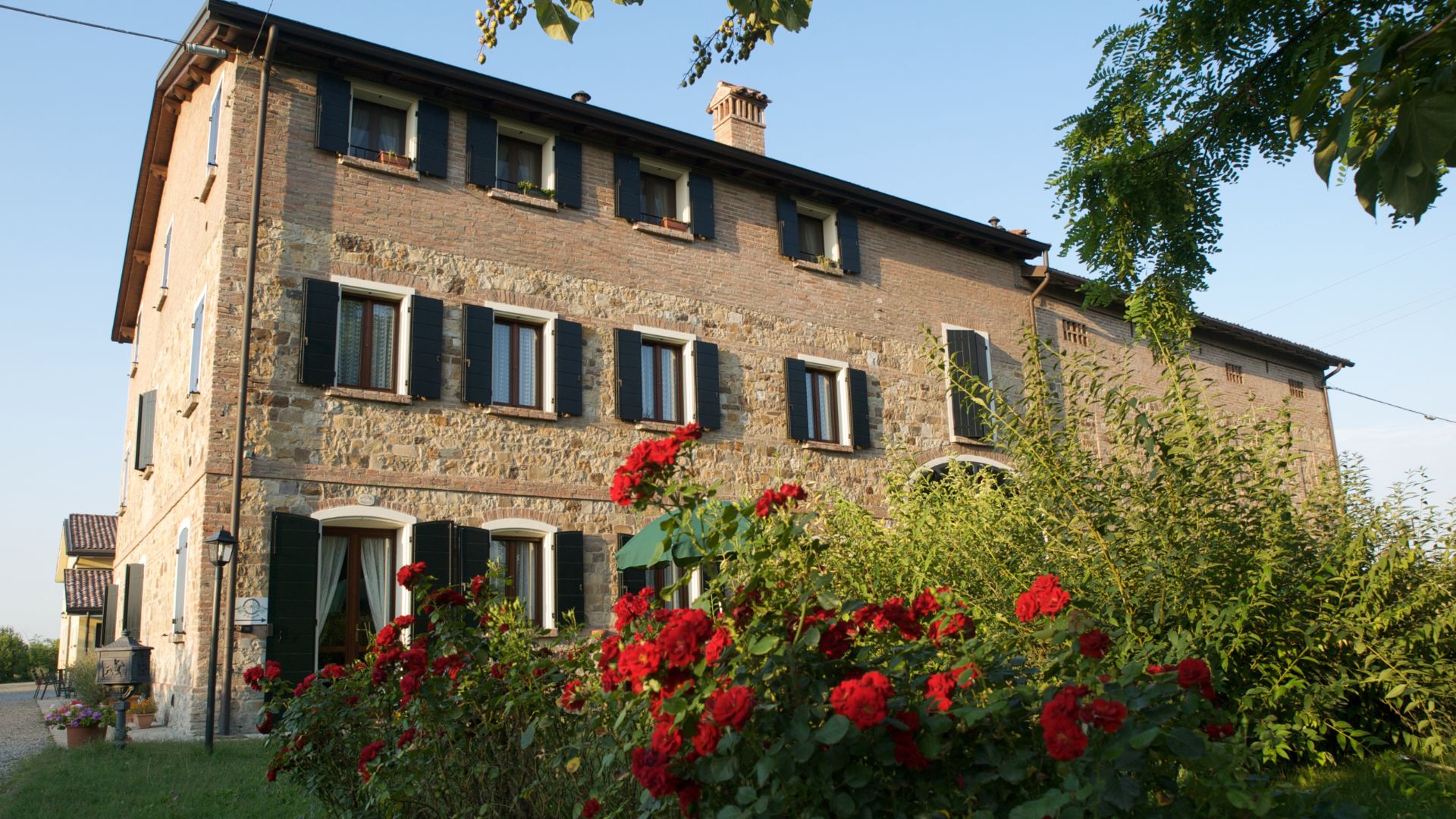
AGRITURISMO IL BRUGNOLO
Welcome to il Brugnolo
If you’re looking for completely independent apartments surrounded by greenery you really are in the right place here!
In fact, Brugnolo is immersed in the green nature of the Emilian countryside. For your relaxation, for that of your children, and again for the runs of your 4-legged friends, you will have 6000 square meters of park at your disposal!