Tired of the usual tourist destinations? Fancy something different? Here we have selected five lesser-known but no less interesting places that reveal a side of Bologna that is somewhat different from the mainstream narrative.

PIAZZETTA PIER PAOLO PASOLINI
‘What is Bologna, which is so beautiful?’: this is how the famous filmmaker and poet Pier Paolo Pasolini spoke of the city where he was born, grew up, and was culturally formed, and which probably made him realise the immense need for free and rigorous thinking amid the silently censorious meshes of conformism. Bologna reciprocated in 2012 by naming a square within the cultural district known as Manifattura delle Arti after him. It coincides with the courtyard of the building used as a film library and Cinema Lumière, and is a place with a peaceful and relaxed atmosphere, which during the year hosts the stands of the Mercato Ritrovato and the Il Cameo refreshment point. During the Il Cinema Ritrovato festival, this is where the carbon lantern screenings are held.

OPIFICIO DELLE ACQUE
The Opificio delle Acque is an educational and documentary centre that uses cultural activities to explore the centuries-old link between the urban development of Bologna and the maintenance of ancient hydraulic structures, which still ensure the proper functioning of the network, now largely hidden from view. It is housed in a historic building known as the Opificio della Grada (“grata” in Bolognese dialect), built at the end of the 17th century to regulate the flow of water from the Reno canal and distribute it to the various productive, industrial, craft and agricultural activities scattered throughout the city. The centre offers cultural, exhibition and educational initiatives aimed not only at raising awareness of Bologna as a city of water, but also at encouraging citizens to save water.

ORATORY OF SAINT CECILIA
The Oratory of Saint Cecilia (or Saints Cecilia and Valerian) has been called the Sistine Chapel of Bologna. It was part of a 14th-century church (whose rose window and bell tower can still be seen from Piazza Verdi) that was damaged by the earthquake of 1505. Giovanni II Bentivoglio, de facto lord of Bologna from 1463 to 1506, had it restored and wanted it to be frescoed by the leading artists known at the Bentivoglio court (Amico Aspertini, Francesco Raibolini known as “il Francia”, Lorenzo Costa and other lesser-known artists). The frescoes, which cover the side walls of the oratory, narrate episodes from the life of Saint Cecilia and her husband Valeriano, set in the time of Urban II (3rd century), who became martyrs for not renouncing their Christian faith. The entrance is in Via Zamboni 15, under the portico of San Giacomo Maggiore.

GIARDINO DEL GUASTO
Located near Piazza Verdi, the Giardino del Guasto is an original example of modern intervention in one of the city’s two historic “guasti” (the other being the Montagnola). Built on the ruins of Palazzo Bentivoglio (destroyed in 1507), it is raised above street level and covers an area of approximately 3,000 square metres. It was designed in 1974 by architect Gennaro Filippini as an experimental playground for children with Montessori-inspired shapes and materials. The hanging space is characterised by a studied use of concrete, shaped in forms evocative of the continuous variation of nature, which aims to stimulate children’s imagination and free expression in play. In summer, the garden also hosts meetings and events.

TORRE DELLA SPECOLA
The Torre della Specola (a term that, in itself, indicates an elevated place for astronomical observations) was built as the city’s first public observatory between 1712 and 1726 at Palazzo Poggi. It can be accessed via the museum of the same name (Via Zamboni 33) and, despite being “only” 29 metres high, offers an extraordinary 360° view of the city of Bologna. The climb to the top is interspersed with pleasant stops in the museum rooms, which offer a broad overview of the instruments used by astronomers in the past, such as armillary spheres and wooden telescopes for observing the sky, clocks, and nautical and topographical instruments used for navigation.
Photo PIAZZETTA PIER PAOLO PASOLINI © Cineteca di Bologna | OPIFICIO DELLE ACQUE © Opificio delle Acque | ORATORY OF SAINT CECILIA © Wikipedia | GIARDINO DEL GUASTO © Ugeorge – Wikipedia | TORRE DELLA SPECOLA © Museo della Specola – SMA Unibo
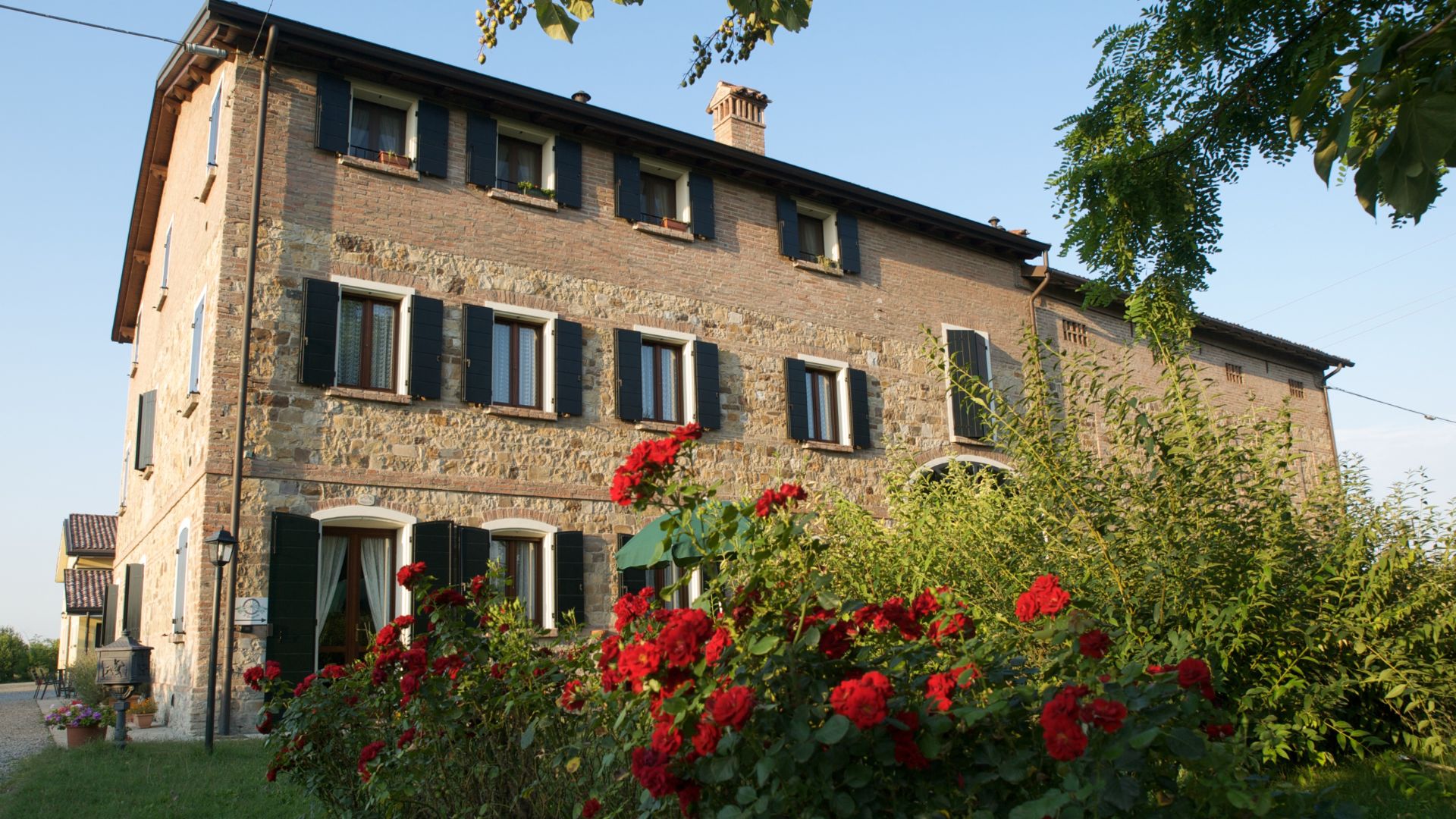
AGRITURISMO IL BRUGNOLO
Welcome to il Brugnolo
If you’re looking for completely independent apartments surrounded by greenery you really are in the right place here!
In fact, Brugnolo is immersed in the green nature of the Emilian countryside. For your relaxation, for that of your children, and again for the runs of your 4-legged friends, you will have 6000 square meters of park at your disposal!