The Spallanzani Trail, which we have already introduced here, is a long-distance hiking route crossing the Reggio Emilia Apennines. It is dedicated to Lazzaro Spallanzani, the famous naturalist born in Scandiano in 1729 and considered the “Galileo of biology”. Divided into several stages, it offers a unique experience combining the discovery of nature with the scientific and cultural history of the area. Originally, the starting point was Ventoso, a hamlet of Scandiano, but in 2019 it was moved to Reggio Emilia, with the addition of a new stage. Let’s discover this stage together.
Reggio Emilia – Scandiano, 5 hours – 20.5 km
Places crossed: Reggio Emilia city centre – Rodano Park – Mauriziano – Secchia Canal – La Giarola – Sabbione – Fellegara – Ca’ de Carolis – Scandiano
Elevation gain: none
The symbolic starting point of the trail is Palazzo dei Musei, the main headquarters of the Civic Museums, which houses collections dedicated to archaeology, ethnography, art history, natural history and the history of the city. These include the collection assembled by Lazzaro Spallanzani in the rooms of his home in Scandiano, which was purchased by the Municipality of Reggio Emilia after the scientist’s death. It includes zoological specimens, particularly marine life forms, as well as palaeontological, mineralogical, lithological and botanical specimens, along with furnishings such as paintings, small tables and ornaments. In its variety, the collection reflects the scientist’s broad range of interests.
From the historic centre of Reggio Emilia, the route heads towards one of the city’s liveliest meeting places, where military history and green spaces come together to create opportunities for cultural and recreational activities. This is the large Ippocastani Park, known by the people of Reggio Emilia as Campo di Marte. It occupies a former state-owned area once used for military exercises and is divided into two sections by the Reggio-Scandiano railway line. The western section dates back to the early 1980s, when numerous plant species were introduced to create a Central European-style green area, characterised by large groups of trees and shrubs alternating with broad grassy clearings. In the eastern section, the landscape is more varied, with small wooded areas, isolated trees and groups of shrubs.
The route then leads to Rodano Park, a vast green area of approximately 400 hectares extending along the river of the same name and embracing the city towards the east. The park stands out for its distinctly “wild” character and its high natural value, also due to the presence of several springs, a Site of Community Importance (SCI) and an Ecological Restoration Area (ERA). The park’s most iconic landmark is the Mauriziano monumental complex, the Malaguzzi family’s country villa where the Reggio-born poet Ludovico Ariosto spent periods of pleasant leisure, later recalled in his Satire: “The pleasant places of our Reggio, / my native nest, were once sweet invitations / to fill my pages. / I always cherish your Mauriziano, / the beautiful residence, the nearby Rodano …”.
Once the urban area has been left behind, the landscape changes and gives way to the countryside around Reggio Emilia, where water has played an important role in shaping the territory, economy and daily life over the centuries. Among the most interesting features are the Rodano weir, a concrete example of how water management influenced the agricultural and urban development of Reggio Emilia, and the Secchia Canal. The latter is an artificial waterway built during Roman times to channel water from the river towards the city. Today, it mainly serves an irrigation function, but it still preserves traces of the ancient hydraulic system, with structures bearing witness to its long history.
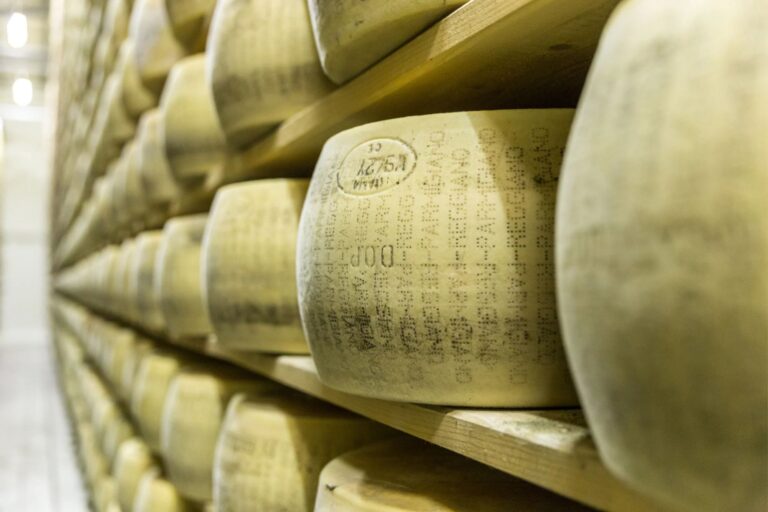
Continuing through the Reggio Emilia countryside, the trail crosses a particularly scenic stretch, where the landscape takes on an even more rural character, with cultivated fields and rows of vines reflecting a deeply rooted agricultural and wine-making tradition. It is here that you come across Il Tralcio farm, an expression of the local agricultural tradition, linked both to the production of local wines and to Parmigiano Reggiano. Among the rows of vines alongside the trail, in addition to the grapes used to produce Lambrusco, there is also Spergola, an ancient white grape variety that was recovered after having risked disappearing. Thanks to its history and strong connection with the area, Spergola can be considered the signature wine of the Spallanzani Trail.
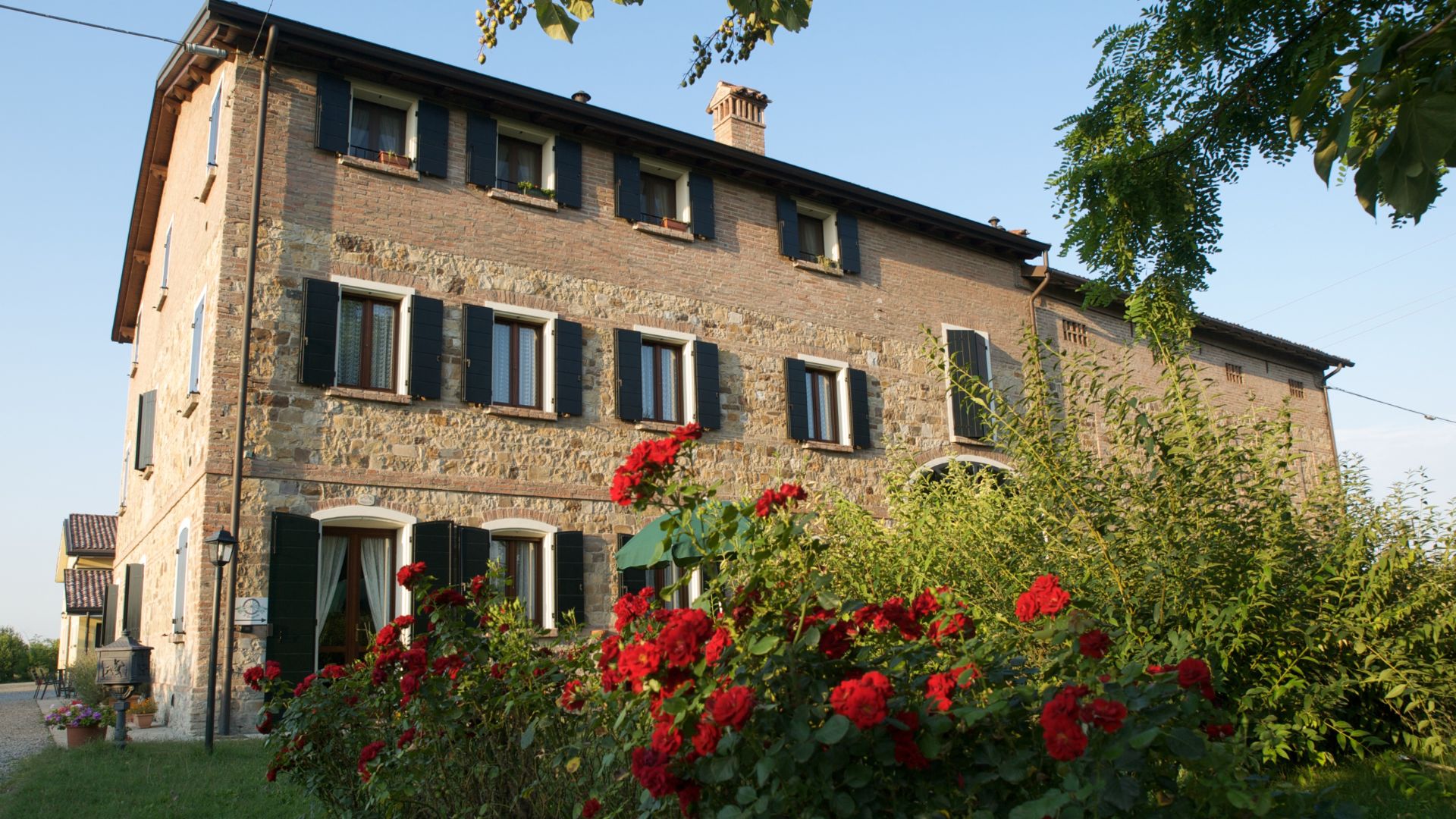
After passing the farm, just a few kilometres further on, you reach our agriturismo, an information point for the Spallanzani Trail, where hikers can find assistance and some useful services for their journey. The route then continues alongside the Tresinaro stream, through an area where the natural landscape alternates with traces of local history, creating a pleasant environment to explore at a leisurely pace. Before reaching the village of Ventoso, you can take a detour towards the historic centre of Scandiano, home to Lazzaro Spallanzani’s birthplace.
For more information about the route of the first stage, visit the official Spallanzani Trail website.
AGRITURISMO IL BRUGNOLO
Welcome to il Brugnolo
If you’re looking for completely independent apartments surrounded by greenery you really are in the right place here!
In fact, Brugnolo is immersed in the green nature of the Emilian countryside. For your relaxation, for that of your children, and again for the runs of your 4-legged friends, you will have 6000 square meters of park at your disposal!