
In the Reggio Apennines, geological diversity translates into a kaleidoscope of landscapes: from clays shaped by erosion to ophiolitic rocks, passing through layers of gypsum and sandstone. A territory that tells millions of years of history through constantly changing shapes and colours. Here we offer you a two-day itinerary to discover the most significant places of this geological heritage.
The first stop is Baiso, a charming town in the central Reggio Apennines, located about 20 kilometres from our farmhouse, known for its spectacular multicoloured badlands that create a truly unique landscape. Seen from a distance, the village appears as a long row of houses clinging to the edge of a vast and unstable amphitheatre of badlands. These unusual formations are the result of erosion which, over time, has shaped ancient layers of clay deposited in the Upper Mesozoic era (about 65 million years ago). Among the most striking (and significant in Emilia Romagna) are those near the hamlet of Casale, famous for their varied colours (brick red, wine red, light grey, greenish grey, yellow, etc.).
About thirty kilometres from Baiso, you can admire the Triassic gypsum deposits of the Secchia Valley (between Villa Minozzo, Castelnovo Monti and Ventasso). These rocks originated in the Upper Triassic period (200-210 million years ago), thanks to the precipitation and accumulation of salts in marine lagoon environments following intense periods of evaporation in hot climates, forming rare evaporites. The gypsum creates a particularly fascinating landscape, with underground and surface karst phenomena such as sinkholes, closed basins and caves. An extraordinary combination of landscape beauty, geodiversity and biodiversity that led UNESCO to include them in the World Heritage List. A nature trail has also been dedicated to the Triassic Gypsum, winding through the Secchia river valley.
The second day takes us to Atticola, a hamlet in the municipality of Vetto, just over 50 kilometres from our farmhouse. Here you can see an unexpected landscape that brings to mind an alien planet or one of the famous canyons overseas. It consists of a series of small volcanoes a few metres high, in an area of red and white coloured ferrous clay outcrops that almost look like sculptures. In the Vetto area, there are numerous nature trails that allow you to reach or explore the area around the Atticola Canyon.
The last stop is the amphitheatre of badlands of Rio Vico, which stretches between the castles of Rossena and Canossa. The badlands were formed by rainwater washing away the degraded clay soil, which, lacking adequate vegetation cover, remained vulnerable to erosion. The local population has named them “cavalli magri” (skinny horses) because of their particular shape, which resembles the protruding ribs of an undernourished animal. The geological diversity that characterises the area has led to its recognition as a geosite, now protected as part of the Emilia Centrale Parks system.
Photo gallery (1) © Parco Nazionale dell’Appennino Tosco-Emiliano | (2) © JuzaPhoto | (3) © Parchi Emilia Centrale


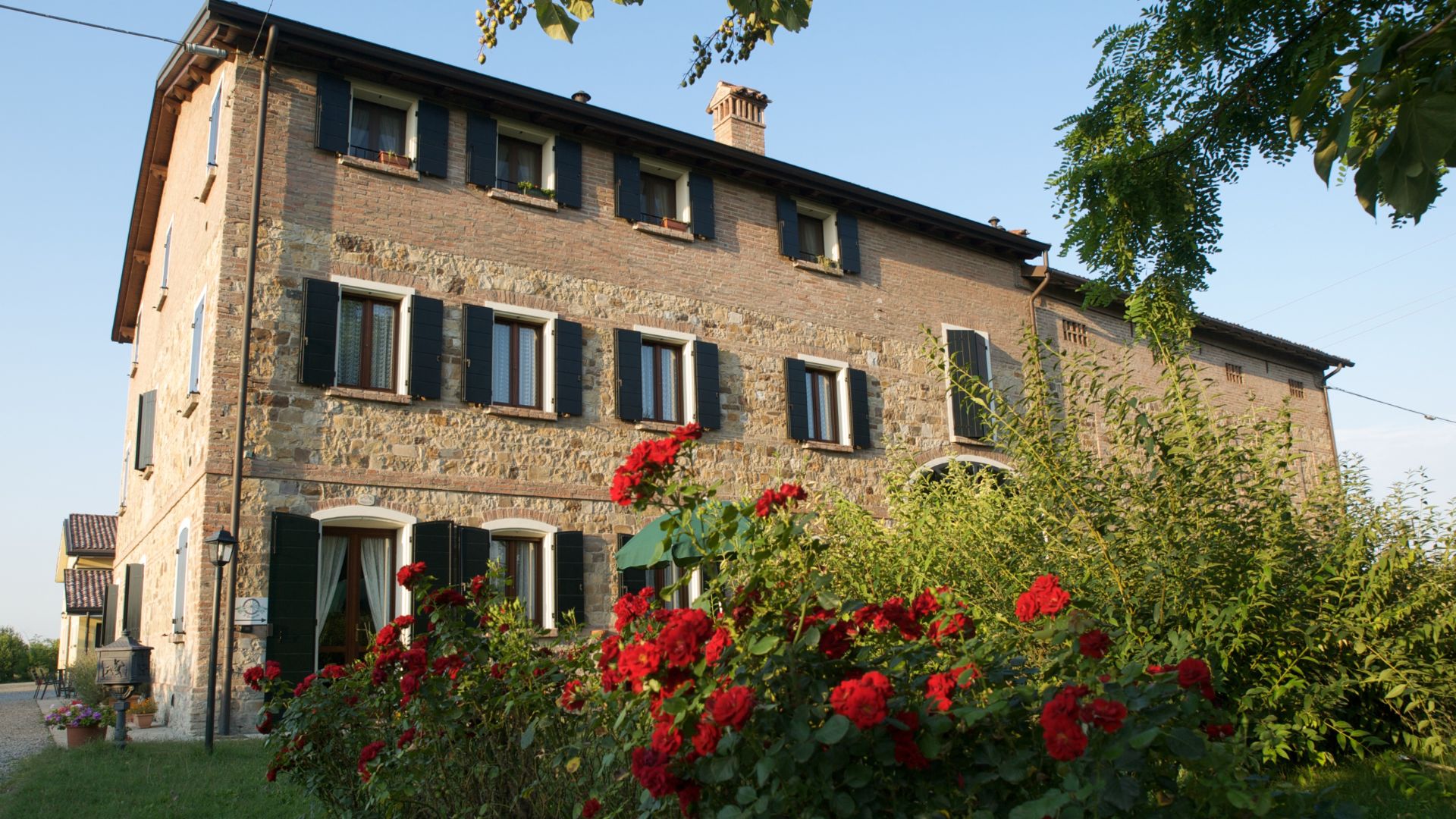
AGRITURISMO IL BRUGNOLO
Welcome to il Brugnolo
If you’re looking for completely independent apartments surrounded by greenery you really are in the right place here!
In fact, Brugnolo is immersed in the green nature of the Emilian countryside. For your relaxation, for that of your children, and again for the runs of your 4-legged friends, you will have 6000 square meters of park at your disposal!