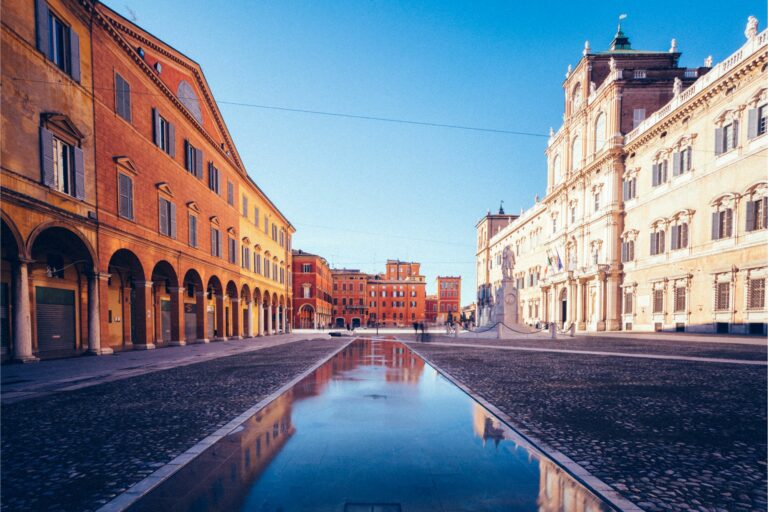
Emilia is a land that surprises with the variety of its landscapes, traditions, and cultural heritage. From the mountains of the Apennines to the banks of the Po River, and to its art and gastronomic cities, this territory features places of such global value and significance that they have earned UNESCO recognition. These sites tell the story, nature, and most authentic identity of Emilia, offering experiences that combine culture, sustainable tourism, and outstanding culinary traditions.
What are the UNESCO World Heritage sites in Emilia? Let’s discover them together.
Appennino Tosco-Emiliano UNESCO MaB Reserve
The Appennino Tosco-Emiliano became part of the UNESCO Man and the Biosphere (MAB) Biosphere Reserve Network in 2015. The area recognized as a MaB Reserve is the only one along the entire Apennine mountain range characterized by the Euro-Mediterranean climatic boundary. Over thousands of years, this peculiarity has given rise to a close relationship between flora, fauna, and humans, shaping the landscape and fostering internationally renowned agri-food excellences such as Parmigiano Reggiano cheese and Prosciutto di Parma ham.
Within the reserve lies over 70% of Italy’s biodiversity. It is a territory that invites exploration along its trails in every season of the year: in summer under the sun, in spring among blossoms, in autumn immersed in the magic of foliage, and in winter among snowy landscapes.
Triassic Gypsum Formations
The Triassic Gypsum formations of the Secchia Valley (between Villa Minozzo, Castelnovo ne’ Monti, and Ventasso) and those of the Reggio Emilia hills were inscribed on the UNESCO World Heritage List in 2023. These rock formations originated in the Late Triassic period (200–210 million years ago), through the precipitation and accumulation of salts in lagoon environments following intense evaporation phases in warm climates, forming rare evaporites.
The result is a highly evocative landscape, characterized by spectacular karst phenomena such as caves, sinkholes, and dolines. A nature trail has also been dedicated to the Triassic Gypsum formations, crossing the Secchia River valley.
Po Grande UNESCO MaB Reserve
Officially established in 2019, the Po Grande UNESCO MaB Reserve, which includes the provinces of Parma, Piacenza, and Reggio Emilia, protects one of the most significant stretches of the Po River in Emilia, where the great river shapes unique and highly characteristic lowland landscapes.
The social, cultural, and economic value of the reserve lies in the many forms of relationship that local communities have developed with the river over time. The Po River shapes the identity of the population and plays a central role in various economic activities, including fishing and tourism.
The reserve is an ideal destination for slow tourism: cycling routes, nature trails, and birdwatching activities allow visitors to discover a rich ecosystem where plant and animal species typical of the Po Valley coexist.
Parma UNESCO Creative City of Gastronomy
In Parma, the relationship with the territory is reflected in the flavors of its cuisine and in a gastronomic culture that, rooted in tradition, has become an excellence recognized internationally. Here, food goes beyond mere nourishment: it is an expression of culture, identity, and a true way of interpreting the world.
It is no coincidence that in 2015 Parma was designated a UNESCO Creative City of Gastronomy. Prosciutto di Parma PDO, Parmigiano Reggiano PDO, Culatello di Zibello PDO, Salame di Felino PGI, Fungo di Borgotaro PGI, Coppa di Parma PGI, and Colli di Parma DOC wines are just some of the excellences of this territory, which has made food its mission and quality its commitment. Visiting Parma means entering the heart of Emilian taste.
Baptistery of Parma
The Baptistery of Parma, dedicated to Saint John the Baptist, has been identified by UNESCO among sites of outstanding astronomical value worldwide. According to some studies, it may function as a large sundial.
Located in Piazza Duomo, it was built starting in 1196 (and completed in the following century) based on a design by Benedetto Antelami. It has an octagonal plan and a vertical development, with a precious pink Verona marble cladding.
Inside, the dome frescoes stand out, created in the 13th century by Po Valley workshops influenced by Byzantine iconographic models, as well as the high-relief sculptures representing the months and seasons of the year, largely attributed to Antelami.
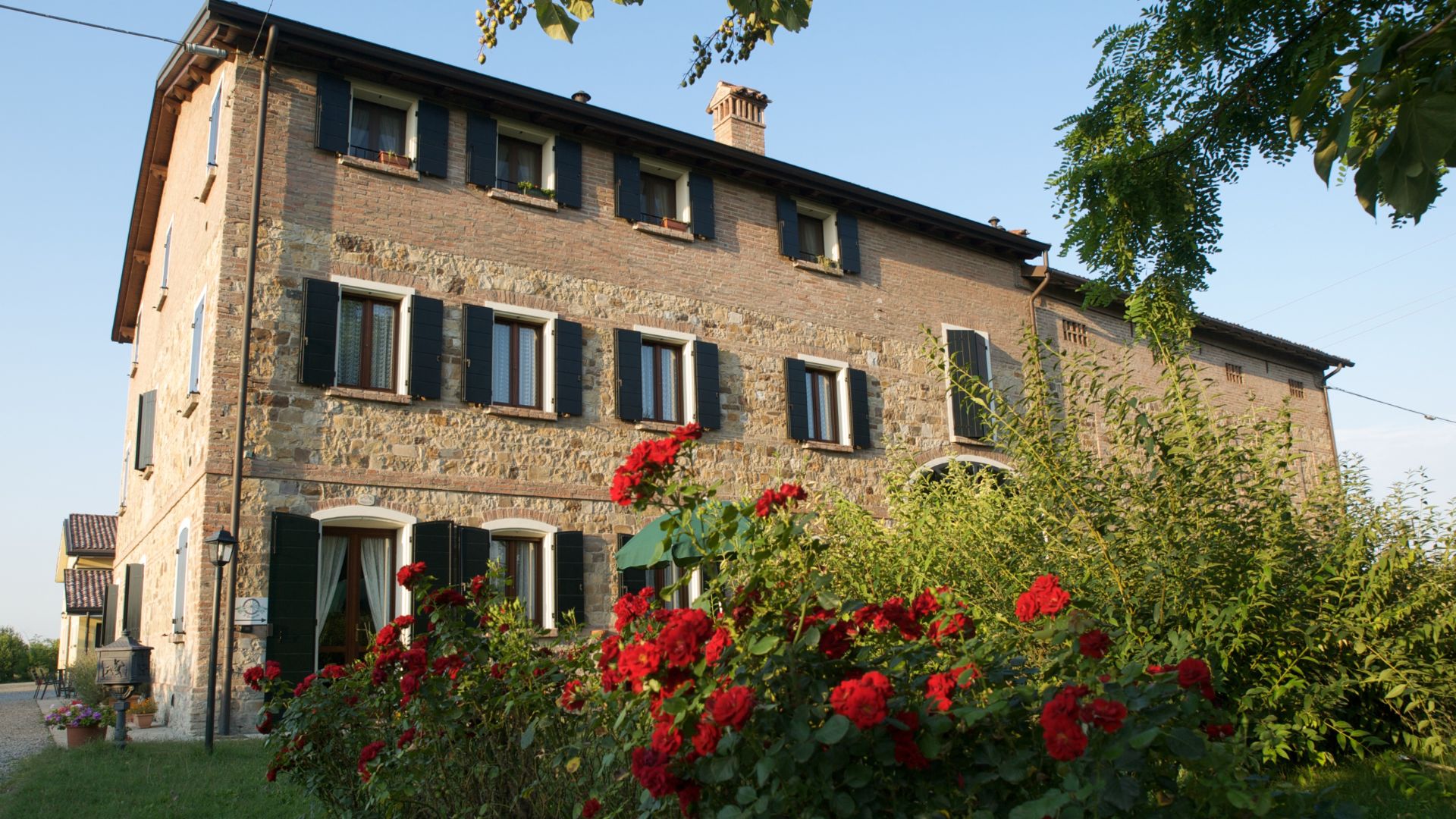
AGRITURISMO IL BRUGNOLO
Welcome to il Brugnolo
If you’re looking for completely independent apartments surrounded by greenery you really are in the right place here!
In fact, Brugnolo is immersed in the green nature of the Emilian countryside. For your relaxation, for that of your children, and again for the runs of your 4-legged friends, you will have 6000 square meters of park at your disposal!