The Orange Flag is a recognition of tourist-environmental quality awarded by the Italian Touring Club to small inland towns that stand out for their excellent offer and quality hospitality. The recognition is awarded on the basis of various criteria, including the enhancement of cultural heritage, environmental protection, the culture of hospitality, and the quality of catering and typical products.
Here we have selected 5 unmissable Orange Flag villages in Emilia.

CASTELVETRO DI MODENA
Located between Modena and Bologna, Castelvetro di Modena is the City of Wine and synonymous with Lambrusco Grasparossa, cultivated here together with the Trebbiano vine used in the production of Balsamic Vinegar of Modena. It has a picturesque appearance, with a profile characterised by the emergence of striking towers and bell towers that stand out against the lush surrounding hills. The heart of the village is Piazza Roma, also known as Piazza della Dama for its characteristic chequered paving. It is overlooked by several fine buildings, including: the Torre delle Prigioni, built between the 14th and 15th centuries entirely of brick; and the Torre dell’Orologio, the only remaining part of an ancient fortified structure. Leaving the square along Via Tasso, we reach the imposing Parish Church, dedicated to Saints Senesio and Teopompo and an unmistakable example of neo-Gothic architecture. Opposite the church is Palazzo Rangoni, a building characterised by a large entrance with a decorated atrium, an inner courtyard, the grand staircase and a balcony connecting the two wings of the building. The Acetaia Comunale (Municipal Vinegar Works) and the permanent exhibition of Renaissance-style clothes Fili d’oro a palazzo are also worth a visit.

FIUMALBO
Also in the province of Modena is Fiumalbo, one of those villages to visit at least once in a lifetime. It retains a mediaeval imprint characterised by cobbled streets, stone houses and roofs still partly in slate. The woods around it form a natural crown over which the peaks of Frignano and Mount Cimone impose themselves. The fulcrum of the historic centre is the Church of San Bartolomeo Apostolo (patron saint of the town). Built in 1220, it was rebuilt in 1592. Inside, it houses several valuable works, including: a 16th-century panel with the Madonna and Saints attributed to Saccaccino; another 16th-century panel with the Redeemer of the Tuscan school; and the apse canvas with the Martyrdom of St Bartholomew, painted by Adeodato Malatesta in 1837. Equally interesting: the Church of the Immaculate Conception, or ‘dei Bianchi’, because it is the seat of the confraternity of the same name; the Church of Santa Caterina, which houses the Museum of Sacred Art; and the Renaissance Oratory of San Rocco, with its interior entirely covered in frescoes painted in 1535 by Saccaccino Saccaccini. Worthy of mention in the surrounding area are the suggestive Celtic huts with their typical stepped roofs, evidence of the Celts’ passage through these territories.

FONTANELLATO
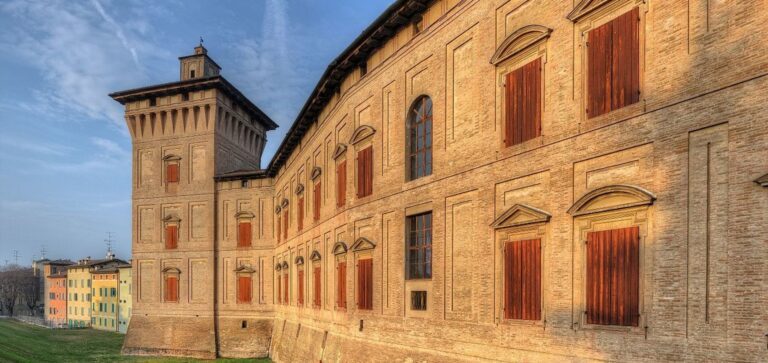
Fontanellato is a delightful town in the Bassa Parmense (lowlands of Parma), awarded the title of Slow City, i.e., able to live well, juggling history, art and gastronomy. It was made wealthy by the presence of the Sanvitale family from the end of the 14th century, which left the most evident trace in the fortress of the same name. Erected in the 14th century on the remains of an earlier fortified tower, the fortress dominates the centre of the town with its lively medieval and Renaissance architecture composed of a central keep, a curtain of crenellated walls and four corner towers. Inside is the Saletta di Diana e Atteone, known for its mannerist frescoes painted in 1524 by Francesco Mazzola known as Parmigianino. Two religious buildings also overlook the square in front of the fortress: the Oratory of the Assumption, with a wooden sacristy dating back to 1720 by Giulio Seletti and decorations by Sebastiano Galeotti; and the Church of Santa Croce, in late-Gothic style, which preserves some valuable works. Other sights include: the Sanctuary of the Blessed Virgin of the Rosary, rebuilt in Baroque style between 1641 and 1660; and the Masone Labyrinth, an extraordinary cultural park with the world’s largest bamboo labyrinth.

BUSSETO
Busseto is another beautiful town in the Bassa Parmense, known not only for its uniqueness and richness in history but also for being the birthplace of the famous composer Giuseppe Verdi, to whom the main square (dominated by a monument depicting the musician almost enthroned created by Luigi Secchi in 1913) and the 19th-century theatre located inside the Rocca Pallavicino are dedicated. In the historical centre, one can see the typical layout of Po Valley towns with long streets lined with porticoes and low palazzetti. The territory of Busseto is distinguished by the presence of numerous religious architectures, including: the Collegiate Church of San Bartolomeo Apostolo, in which valuable frescoes and works of art can be admired; the Oratory of the Santissima Trinità, which features delightful 18th-century stuccoes and a splendid polychrome marble high altar; and the Church of Santa Maria degli Angeli, with its famous sculptural representation of the Lamentation over the Dead Christ, created by Guido Mazzoni in 1476. Other places of interest to visit in Busseto are: Villa Pallavicino, a splendid example of Renaissance architecture, in whose stables is housed the Renata Tebaldi Museum; the Casa Barezzi Museum, where the composer lived with his wife Margherita Barezzi; and Giuseppe Verdi’s Birthplace, in the village of Roncole, the most evocative of Verdi’s places, which can also be visited in augmented reality.

CASTELL’ARQUATO
Nestling in the hills of the Val d’Arda, Castell’Arquato is a village of rare beauty pervaded by an atmosphere of times gone by. It has very ancient origins, in fact it is thought to have been a settlement already in Roman times. Visitors are struck by the grandeur of its monumental centre, represented by the large municipal square, overlooked by the Rocca Viscontea, erected in the 14th century at the behest of Luchino Visconti, which currently houses museum exhibits on the theme of military life in the Middle Ages; the Collegiate Church of Santa Maria Assunta, rebuilt after the earthquake of 1117 and consecrated in 1122, whose architectural style is that of the Po Valley Romanesque; and the 13th-century Palazzo del Podestà, used as a venue for exhibitions, weddings, conferences and meetings. Other sights include: the Torrione Farnese, built around 1530 and left unfinished; the G. Cortesi Geological Museum, which houses fossils and whale remains from the Piacenziano Geological Nature Reserve; the Luigi Illica Museum, dedicated to the rebellious genius of the famous playwright and librettist from Arquato; and the splendid Romanesque complex with the Church and Baptistery of San Giovanni, in the hamlet of Vigolo Marchese. Castell’Arquato also boasts the title of Wine City.
Photo © Touring Club
AGRITURISMO IL BRUGNOLO
Welcome to il Brugnolo
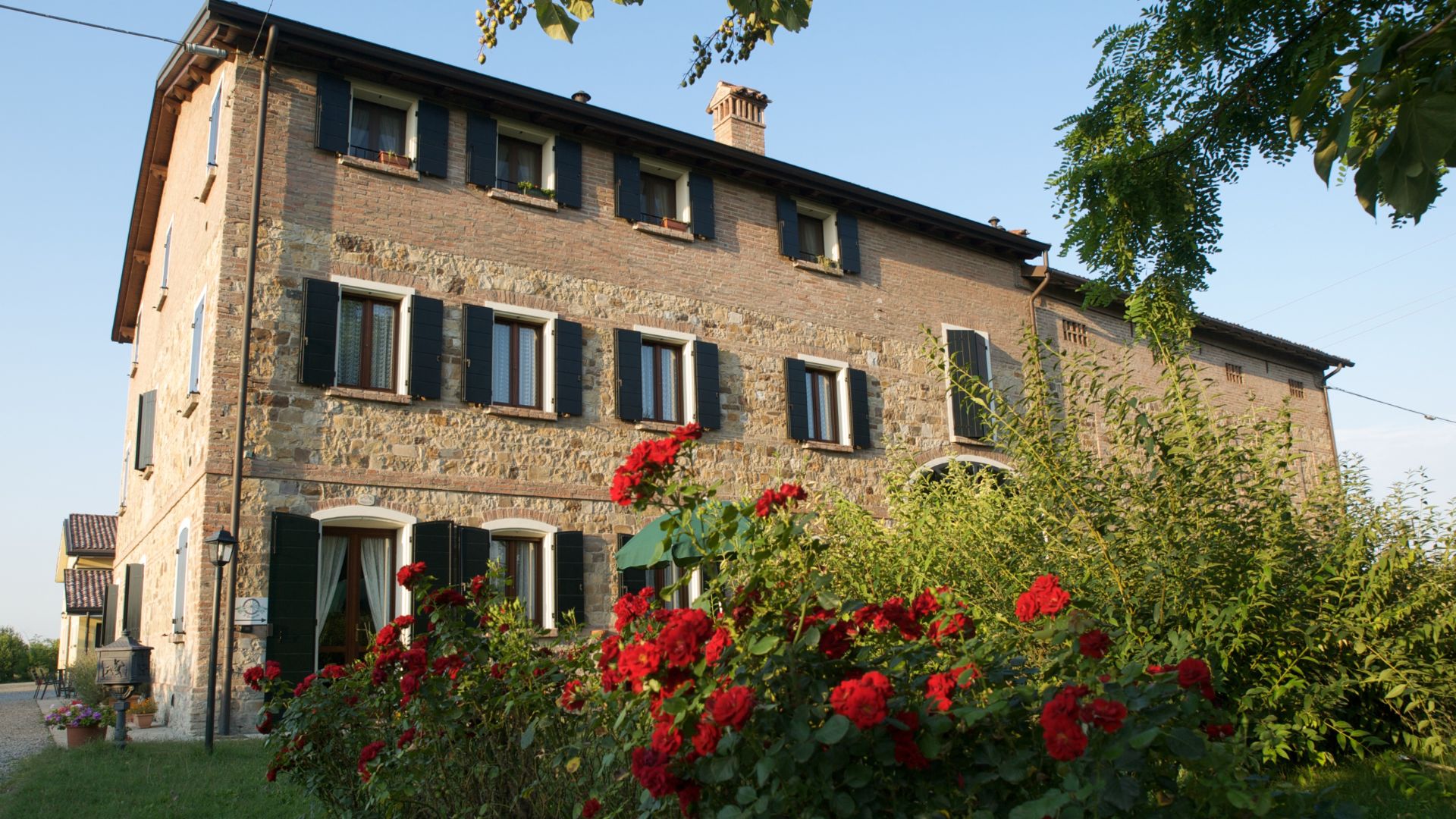
If you’re looking for completely independent apartments surrounded by greenery you really are in the right place here!
In fact, Brugnolo is immersed in the green nature of the Emilian countryside. For your relaxation, for that of your children, and again for the runs of your 4-legged friends, you will have 6000 square meters of park at your disposal!