Reggio Emilia is a city that knows how to surprise, where culture is a heritage to be shared and a right for everyone. Below you’ll find the main attractions in Reggio Emilia with free admission.
Ready to set off on a journey through art and culture… at zero cost?
PALAZZO DEI MUSEI
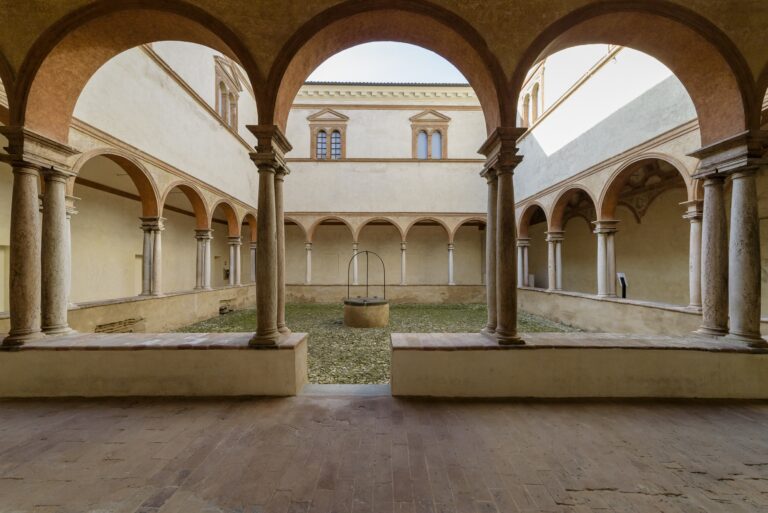
Housed in what was once a Franciscan convent, the Palazzo dei Musei brings together collections dedicated to a wide range of fields: archaeology (Roman mosaics, the Chierici Museum of Palethnology, the Portico dei Marmi – Roman section, the Museum of Regium Lepidi), ethnography, art history (Galleria dei Marmi – medieval section, medieval mosaics), natural history (the Spallanzani Museum, zoological, anatomical, botanical, geo-mineralogical and paleontological collections), and the history of the city.
Highlights not to be missed include the famous Venus of Chiozza, a stone figurine dating back to the Upper Paleolithic that depicts a woman with generous forms and is considered one of the oldest Paleolithic Venuses; the archaeological route from Prehistory to the 18th century; and the photographs of Luigi Ghirri, a poetic journey through the Po Valley.
GALLERIA PARMEGGIANI
The Galleria Parmeggiani is a unique example of a 19th-century house museum. It is housed in a Gothic-Renaissance–style palace built by Luigi Parmeggiani between 1925 and 1928 to host his art collection. The architecture blends models from the ancient, medieval and Renaissance worlds, creating a coherent dialogue with the collections inside.
The gallery brings together three distinct 19th-century collections: paintings, furniture and textiles from the collection of the painter, collector and antiquarian Ignacio León y Escosura; weapons and goldsmith works from the Parisian Marcy workshop; and the pictorial production of Cesare Detti. Among the most significant works are the Portrait of Prince Carlos of Bourbon by Herrera Barnuevo, the 16th-century Triptych attributed to the Master of Bruges, and Christ Blessing by El Greco.
MUSEO DEL TRICOLORE
Reggio Emilia proudly bears the title “City of the Tricolour,” as this is where the Italian flag was born—a story told in the Museo del Tricolore. Set inside the City Hall, in spaces adjacent to the Sala del Tricolore (where on 7 January 1797 the banner destined to become the national flag was officially proclaimed), the museum houses numerous original documents and memorabilia, as well as the core works from the project Ninety Artists for a Flag, conceived by Deanna Veroni in support of the Mother and Child Hospital and donated to the city by the Storchi family.
The exhibition goes beyond the history of the Tricolour, also exploring the political history of Reggio Emilia, from the birth of the Reggian Republic to evidence of the contribution made by its citizens to the struggles for national unity.
MUSEUM OF THE HISTORY OF PSYCHIATRY
The Museum of the History of Psychiatry is a surprising place with a powerful emotional impact. It is housed in the Lombroso Pavilion, one of the symbolic buildings of the former San Lazzaro Psychiatric Hospital, which also hosted the painter Antonio Ligabue from 2 March 1945 to 6 December 1948.
The building presents itself as a museum of itself, both container and content of a story whose walls bear explicit witness. The exhibition route displays scientific instruments, restraint and therapy devices (such as straitjackets, electroshock machines, silence helmets used to isolate patients, and the “dripping water” urn), as well as tragic evidence of how patients were once considered “dangerous to the community.”
COLLEZIONE MARAMOTTI
Housed in the historic headquarters of the Max Mara fashion house, the Collezione Maramotti is a private collection of contemporary art. It includes several hundred works created from 1945 to the present, over two hundred of which are on permanent display, representing some of the main Italian and international artistic trends that emerged in the second half of the 20th century.
The collection mainly consists of paintings, but also includes sculptures and installations. Featured artists include major figures such as Francis Bacon, Jean-Michel Basquiat, Alberto Burri, Nicola De Maria, Anselm Kiefer, Jannis Kounellis, Mimmo Paladino and Bill Viola. Alongside the permanent exhibition, spaces dedicated to temporary initiatives regularly host exhibitions and projects commissioned from artists, offering visitors ever-new and stimulating experiences.
MAURIZIANO
Located at the center of a park enclosed between the Rodano stream and the Ariolo canal, the Mauriziano complex is a must-see for lovers of literature and poetry. It owes much of its fame to Ludovico Ariosto, the great poet of Orlando Furioso, who stayed here for long periods and mentioned it in his Satires.
Despite undergoing significant renovations between the 17th and 18th centuries, it still retains the 16th-century volumetric layout typical of Renaissance villas. Of particular interest is the east wing, where visitors can admire the Camerino of the Poets, the Camerino of the Horatii and Curiatii, and the Camerino of Ariosto, with 16th-century frescoes depicting hunting scenes, landscapes, love scenes, historical episodes and literary figures, fully in keeping with the courtly and literary taste of the time.
BASILICA OF THE BLESSED VIRGIN OF THE GHIARA
The Basilica of the Blessed Virgin of the Ghiara is one of the most important Marian places of worship in Italy. It was built thanks to donations from the faithful of Reggio Emilia following a miraculous event. On 29 April 1596, a young man who had been deaf and mute since birth miraculously regained hearing and speech after fervent prayer before an image of the Madonna.
Inside, visitors can admire outstanding works of art by masters of 17th-century Emilia such as Ludovico Carracci, Guercino, Lionello Spada, Alessandro Tiarini, Carlo Bononi and Luca Ferrari. In some ground-floor rooms of the structure separating the two cloisters of the Servite convent is the Museum of the Sanctuary of the Blessed Virgin of the Ghiara (also free of charge), which houses liturgical objects and votive offerings donated over the centuries as acts of devotion to the miraculous image of the Madonna.
BASILICA OF SAN PROSPERO
Located in the square of the same name, the Basilica of San Prospero is one of the oldest churches in Reggio Emilia and one of the most significant examples of Emilian Baroque. Dedicated to the city’s patron saint (celebrated on 24 November), it was founded in 997 and completely rebuilt in the first half of the 16th century, while its beautiful façade dates from 18th-century interventions.
The basilica houses numerous works of great artistic value, including the majestic fresco cycle of the Last Judgment by Camillo Procaccini in the apse and the precious inlaid wooden choir depicting rural landscapes, still lifes and urban perspectives. At the edge of the churchyard stand six red Verona marble lions, sculpted at the beginning of the 16th century by the Reggian artist Gaspare Bigi.
CATHEDRAL OF SANTA MARIA ASSUNTA
The Cathedral of Santa Maria Assunta has a very long and complex history, marked by a rich layering of styles. Built on an ancient Roman structure around 857, it has undergone numerous interventions and alterations over time that have changed its original appearance.
On the exterior, the tower rising above the façade is adorned with a rare gilded copper work depicting the Madonna and Child with the Fiordibelli couple, created in 1522 by the Reggian artist Bartolomeo Spani. Inside, there are numerous chapels clad in fine, exquisitely carved marbles. Among the most notable works are the tomb of Orazio Malaguzzi by Clemente, the funerary monument of Valerio Malaguzzi by Spani, and the Fiordibelli Chapel, with the Assumption of the Virgin Mary, Saint Peter Enthroned and Saint Jerome by Giovanni Francesco Barbieri, known as Guercino.
Photo gallery © Reggio Emilia Welcome


AGRITURISMO IL BRUGNOLO
Welcome to il Brugnolo
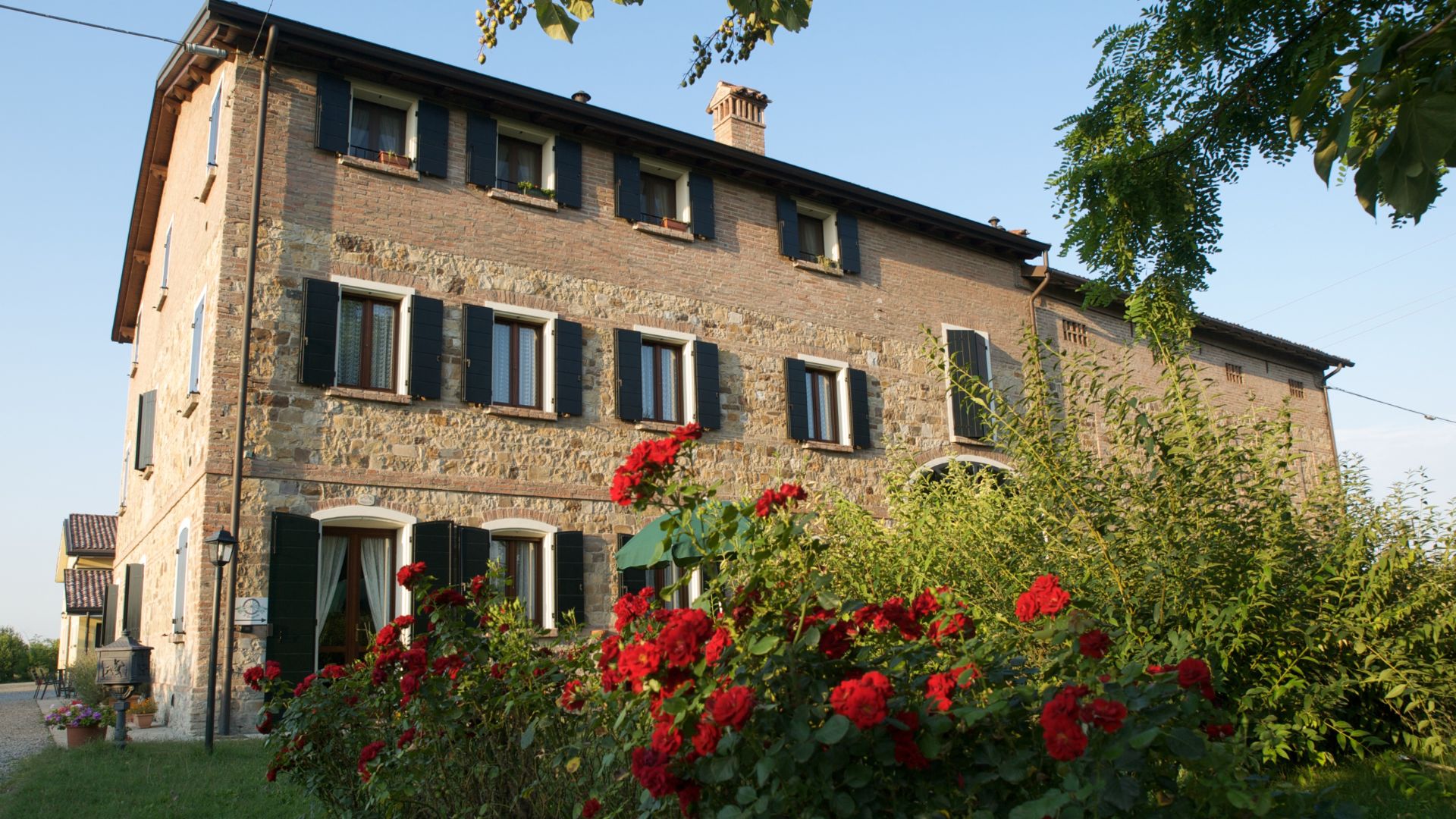
If you’re looking for completely independent apartments surrounded by greenery you really are in the right place here!
In fact, Brugnolo is immersed in the green nature of the Emilian countryside. For your relaxation, for that of your children, and again for the runs of your 4-legged friends, you will have 6000 square meters of park at your disposal!