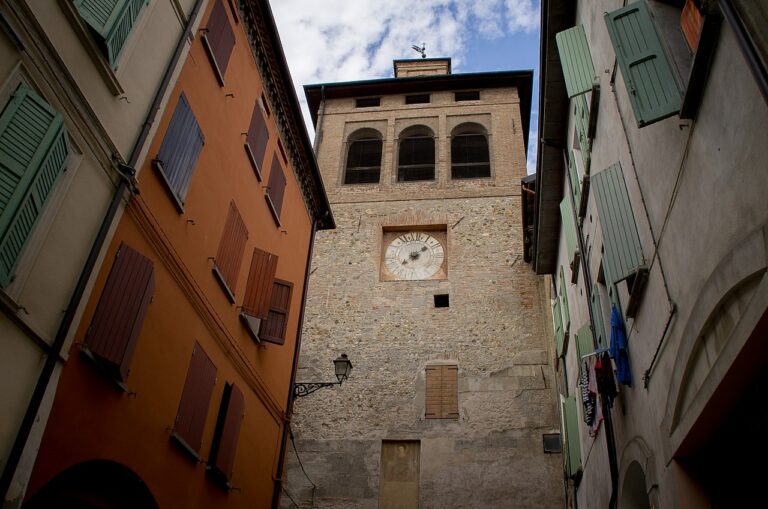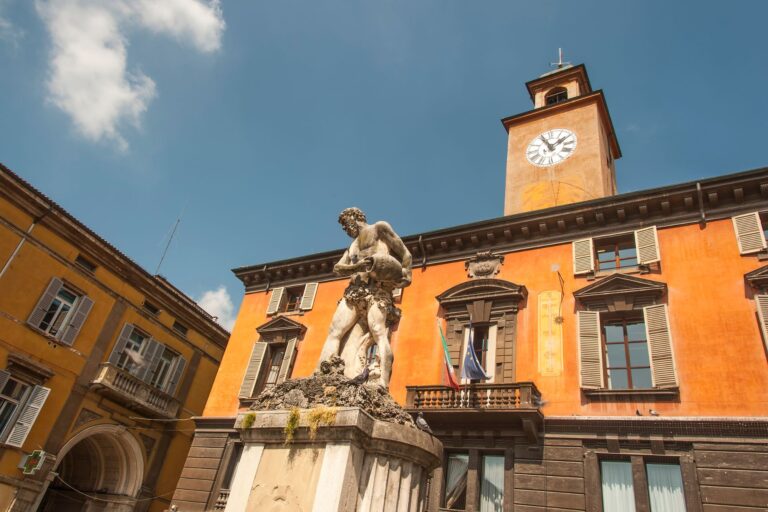
The territory of Scandiano preserves an extraordinary legacy of stones and history: a network of castles and fortified residences that tells centuries of power, art, and daily life. Battlemented towers, quiet courtyards, and walls that seem to defy time bear witness to the strategic role this land has played throughout history. Each structure holds memories, traditions, and traces of the great families who shaped its fate. Exploring these ancient fortifications, even just admiring them from the outside, means embarking on a journey through architecture, landscape, and the past.
Let’s discover together the historical fortifications of Scandiano.
Rocca dei Boiardo
The Rocca dei Boiardo, located in the historic center of Scandiano, is a monument of great historical and cultural value. Built in the 12th century by the Da Fogliano family as a defensive structure, it passed to the Boiardo family in 1423, who transformed it into an elegant noble residence enriched with paintings and sculptures. In the following centuries, it was inhabited by various noble families who modified its appearance. The building combines several styles: medieval (the Pusterla Tower at the north entrance and the hanging arches in the courtyard), Renaissance (courtyard portico), and Baroque (staircase, biforas, courtyard architraves, and stucco decorations in the Este apartment). The Rocca was home to poets like Matteo Maria Boiardo and a site of experiments by the renowned scientist Lazzaro Spallanzani. Today, it hosts cultural events, gastronomic initiatives, and performances.
Castello di Arceto
The Castello di Arceto, located in the eponymous hamlet, is one of the oldest fortifications in the area. First mentioned in a document in 883 and granted to the bishops of Reggio Emilia by Otto I in a 962 charter, from 1414 it followed the historical events of Scandiano. It is a rare example of a lowland fortress built on an embankment created from earth excavated from an elliptical moat. Recently restored, it preserves traces of the moat, drawbridge, ravelin, and Pusterla Tower. Among its most interesting features are the monumental staircase built by the De Mari marquises in 1750 and the Oratory of San Rocco, erected in the 16th century by the Thiene marquises in the inner courtyard. The castle can be visited by appointment.
Castello di Rondinara
The Castello di Rondinara stands in the hamlet of the same name, near the Church of San Giovanni Battista. Built to oversee the Tresinaro Valley and documented since the 11th century, the castle was long owned by the Da Fogliano family. Today, only the perimeter walls and the main building on the north side, adapted at the end of the 19th century, survive. Set in a naturally charming environment, it represents an important testimony of the area’s history and a characteristic feature of the Reggio hills landscape. Currently privately owned by the Gazzotti family, it is only visible from the outside. For hiking enthusiasts, several trails cross the Rondinara hamlet.
Castello della Torricella
The Castello della Torricella, also called La Torricella or Castel Cugini (by its current owners), rises on the hills above the Ventoso hamlet. Declared a national monument in 1861, it was built in the first half of the 14th century by the Da Fogliano family and transformed in the following century into a summer residence by the Boiardo family. A 19th-century restoration restored its typical medieval fortress appearance. The castle has three levels and is completed by a tower with Ghibelline battlements. Tradition holds that Matteo Maria Boiardo composed part of Orlando Innamorato here. Privately owned, the castle is always visible from the outside, while interior access is allowed only on special occasions.
Castello Dondena Bagnoli
Finally, in the hamlet of Iano stands the Castello Dondena Bagnoli. Built in the second half of the 19th century, it reflects the neo-medieval taste popular at the time. It is structured on two levels harmonized by two towers. The main building connects to a rustic wing extending westward through a square tower topped with a covered battlement. A circular tower, ending with a Guelph-style battlement, completes the architectural ensemble. Privately owned, the castle is only visible from the outside. For hiking enthusiasts, it can be reached via the panoramic trail “L’antica Corte di Figno”.
Main photo © Giorgio Galeotti – Wikipedia | Photo gallery (1) © Castelli Emilia-Romagna | (2) © Roberto Federici | (3) © Associazione Dimore Storiche Italiane


AGRITURISMO IL BRUGNOLO
Welcome to il Brugnolo
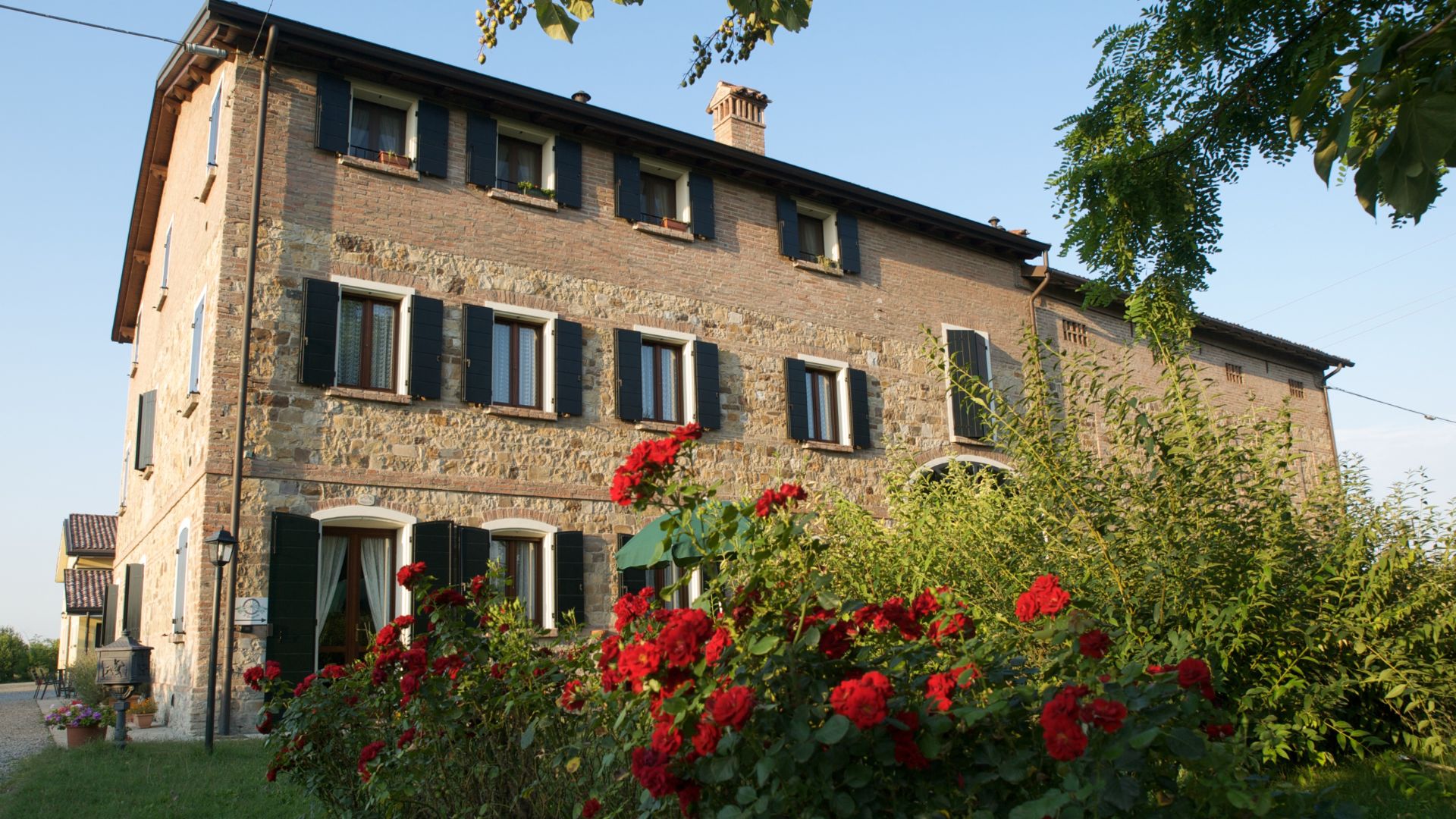
If you’re looking for completely independent apartments surrounded by greenery you really are in the right place here!
In fact, Brugnolo is immersed in the green nature of the Emilian countryside. For your relaxation, for that of your children, and again for the runs of your 4-legged friends, you will have 6000 square meters of park at your disposal!