
The Modenese Apennines hold a widespread heritage of extraordinary charm, where nature and spirituality have coexisted harmoniously for centuries. Among forests, panoramic ridges and small villages suspended in time, ancient parish churches rise up and tell a long, layered story made of faith, community and local tradition. These sacred buildings, often isolated and surrounded by still-unspoiled landscapes, are one of the most authentic expressions of Apennine identity.
Here we propose a wonderful itinerary that will guide you in the discovery of four ancient parish churches of the Modenese Apennines.
Our first stop takes us to the evocative hamlet of Rocca Santa Maria, a fraction of the municipality of Serramazzoni, about 25 kilometres from our farmhouse. Here, perched on a steep limestone rock, stands the Pieve di Santa Maria Assunta, one of the oldest and most fascinating parish churches in the Modenese mountains. The earliest documentary records date back to 971 and then to 1038, when the Bishop of Modena ceded it to Boniface III of Tuscany. Later, in 1108, his daughter Matilda of Canossa decided to return it to the Bishop of Modena, consolidating the bond with ecclesiastical authority. Although it has undergone numerous interventions over the centuries, the church still preserves its original Romanesque layout. Of particular interest are the capitals, dating to the 11th century and in pre-Romanesque style, decorated with plant motifs, stylised leaves and flowers, ribbons and scrolls.
Continuing our itinerary we head towards Pavullo nel Frignano, about 30 minutes from the Pieve di Santa Maria Assunta, and reach the hamlet of Coscogno, where the Parish Church of Sant’Apollinare stands. The dedication to the first Bishop of Ravenna bears witness to the antiquity of its original construction, which may date back to the era of Byzantine rule in the Apennines (7th–8th century). The building stands in an isolated position, surrounded by a hilly landscape that enhances its historical and spiritual value. The current structure retains Romanesque elements, although it has been modified and restored over time, adding architectural layers. The most remarkable feature is the portal, richly decorated with carved symbols evoking the struggle between good and evil — a recurring theme in medieval sacred art.
Our third stop takes us to Monteobizzo, another hamlet of Pavullo nel Frignano, where the Parish Church of Santi Vincenzo e Anastasio stands. The current church is the heir of the medieval Pieve di Palude or di Paule, considered the oldest parish church in the Frignano area to hold jurisdictional rights. It welcomed pilgrims on their journeys between the Duchy of Modena and Tuscany, at least until 1157, when it lost its status as a parish church in favour of the church of Renno. The building, remodelled over the centuries, still preserves important traces of its original medieval layout. Inside, works of great historical and artistic value are on display, most notably a 16th-century stone baptismal font and a painting of the Madonna and Child attributed to Adeodato Malatesta, the most influential Modenese painter of the 19th century.
The fourth and final stop is the Pieve di San Giovanni Battista, also known as the Pieve di Renno, after the hamlet of the same name in Pavullo nel Frignano. This is one of the most important and best-preserved parish churches in the Modenese Apennines. It was built in the 12th century at the behest of the noble Montecuccoli family. Its architecture reflects the typical layout of mountain parish churches: a three-nave plan with the altar facing east. The interior holds elements of great historical and artistic interest, including a red marble holy water stoup said by legend to have been donated by Countess Anna Bigi, mother of Raimondo Montecuccoli; ancient Comacine rosettes; and the tombstone of Count Cesare Montecuccoli (1506), who was the greatest feudal lord of the Frignano.
Photo © Foto Manfredini – In Appennino Modenese
AGRITURISMO IL BRUGNOLO
Welcome to il Brugnolo
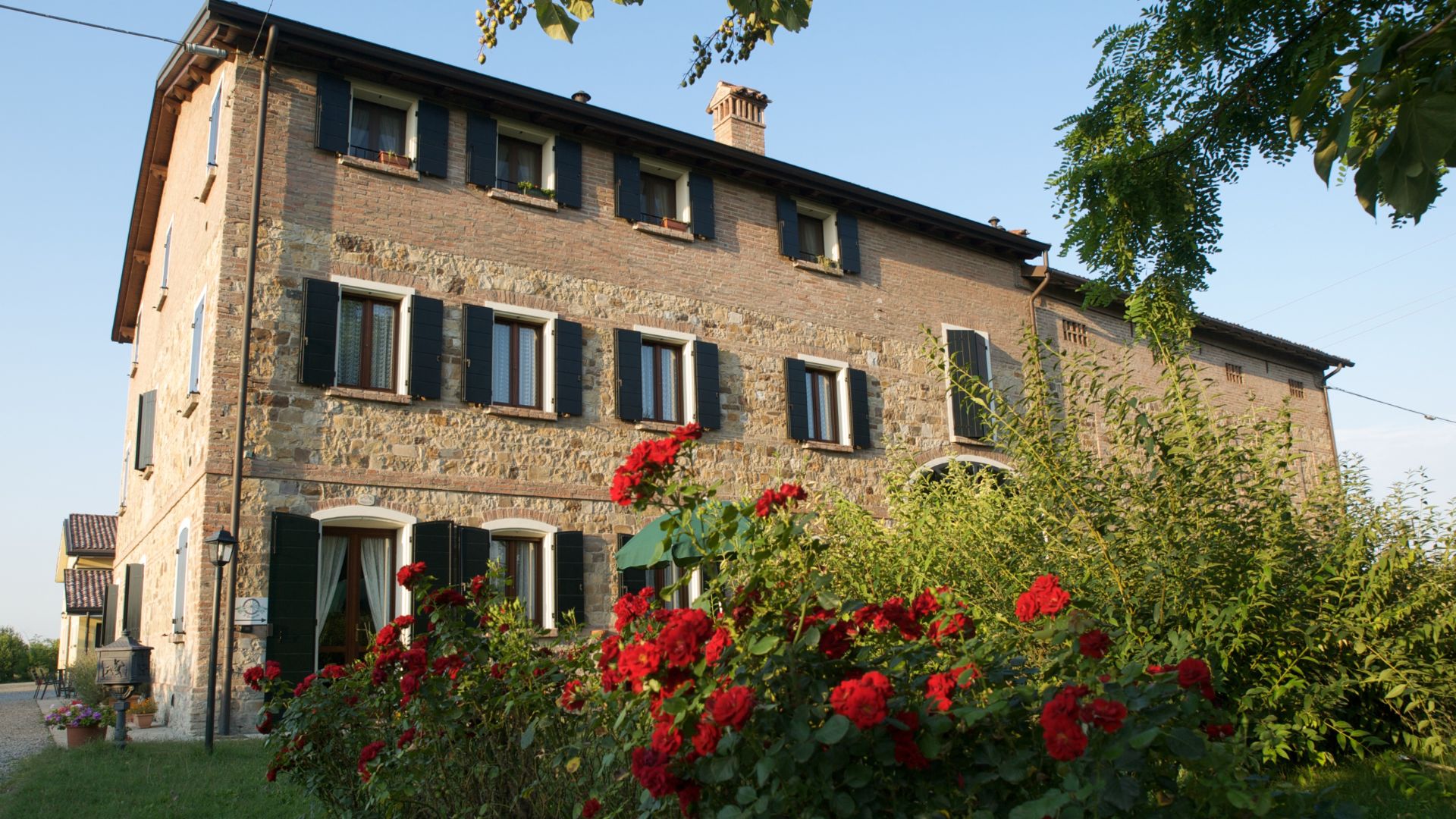
If you’re looking for completely independent apartments surrounded by greenery you really are in the right place here!
In fact, Brugnolo is immersed in the green nature of the Emilian countryside. For your relaxation, for that of your children, and again for the runs of your 4-legged friends, you will have 6000 square meters of park at your disposal!


