Reggio Emilia is a city that knows how to surprise those who observe it with a keen eye. Deeply connected to the figure of Luigi Ghirri, one of the most influential Italian photographers of the 20th century, and home to the renowned international festival Fotografia Europea, it holds an extraordinary visual heritage capable of inspiring anyone who picks up a camera. Between contemporary architecture that seems to touch the sky and Renaissance cloisters steeped in silence, between rooms filled with history and Baroque domes that dominate the city’s rooftops, every corner has a story to tell. Whether you are an experienced photographer or simply an enthusiast, Reggio Emilia will offer you fascinating and authentic subjects.
Here are the unmissable places and spots to capture.
Calatrava Bridges
The Calatrava Bridges, named after the famous Spanish engineer and architect who designed them, are not simply bridges — they are true architectural sculptures. Inaugurated in 2007, they stand along the A1 motorway and welcome travellers heading into the city with a succession of dynamic lines and lightweight structures that seem to float in the air. The complex consists of a central arch bridge flanked by two cable-stayed lateral bridges, extending like a futuristic gateway. From a photographic standpoint, their design offers clean lines and rigorous geometries, ideal for minimalist and contemporary shots. The bright white of the steel changes appearance depending on the light of day, producing striking plays of shadow that are particularly captivating at dawn and dusk.
Cloisters of San Pietro
The Cloisters of San Pietro are part of a 16th-century monastic complex located along Via Emilia San Pietro. There are two: a smaller, more intimate one with a late 15th-century style, and a larger one featuring elements typical of Mannerism. The smaller cloister, built between 1524 and 1525 to a design by Bartolomeo Spani, is a perfect example of adherence to Renaissance principles. The larger cloister, completed some sixty years later by Prospero and Francesco Pacchioni, has a late Mannerist character of great scenic impact. The interplay of light between the columns, the frescoes of the smaller cloister and the statues adorning the larger one all contribute to creating the perfect setting for photographs of great charm.
Palazzo Fontanelli Sacrati
Further along Via Emilia San Pietro stands Palazzo Fontanelli Sacrati, one of the most important civic monuments and a jewel of Reggio Emilia’s architectural heritage. Its history dates back to 1492, when the three brothers Giovanni, Andrea and Jacopo Fontanelli had the long arcaded façade built, renovating a pre-existing building that the family had purchased from the Da Correggio in 1451. The true treasure of the palazzo, however, is its inner courtyard. Adorned with an ancient well in Verona marble and a large wisteria that bursts into colour every spring, it is one of the most photographed spots in the city.
Piazza Cesare Battisti
Piazza Cesare Battisti, known to everyone as Piazza del Monte, is one of the most enchanting urban views in Reggio Emilia, capable of surprising even those who know the city well. Famous for its distinctive oval shape, it is surrounded by buildings of great historical significance. The most interesting angle for photographers is obtained by going up to the second floor of the 17th-century Palazzo Bussetti, traditionally attributed to Lorenzo Bernini. From here, an unexpected and privileged perspective opens up onto the nearby Hotel Posta, the Palazzo del Podestà and the whole square, with the architectures interlocking in a composition of particular visual harmony.
Tricolour Hall
The Tricolour Hall is the place where, on 7 January 1797, representatives of the free cities of Reggio, Modena, Bologna and Ferrara gathered to proclaim the Cispadane Republic, adopting the flag that would go on to become the national banner of Italy. Located inside the Palazzo del Comune, it is one of the most admired and photographed spaces in Reggio Emilia. It currently serves as the seat of the City Council and can be visited during the opening hours of the Tricolour Museum. From a photographic point of view, it is recommended to take the shot from the main entrance, so as to capture a complete panoramic view of the space.
Dome of the Church of San Giorgio
Located along Via Farini, the Church of San Giorgio is an excellent example of Baroque architecture. The current building dates back to the 17th century, when it was decided to completely rebuild the original structure first mentioned in documents from 1146. The dome, raised in the first half of the 18th century to a design by the Bolognese architect Torreggiani, makes for a perfect subject for urban and perspective shots. By standing at the corner of Via San Carlo and Via Squadroni, you can photograph the dome rising majestically against the sky, towering over the low rooftops of the surrounding buildings with a highly scenic effect. The best light conditions occur in the middle of the day or at sunset, when the dome takes on warm, golden tones.
Photo gallery credits (2) © Chiostri di San Pietro | (3) © Comune di Reggio Emilia


AGRITURISMO IL BRUGNOLO
Welcome to il Brugnolo
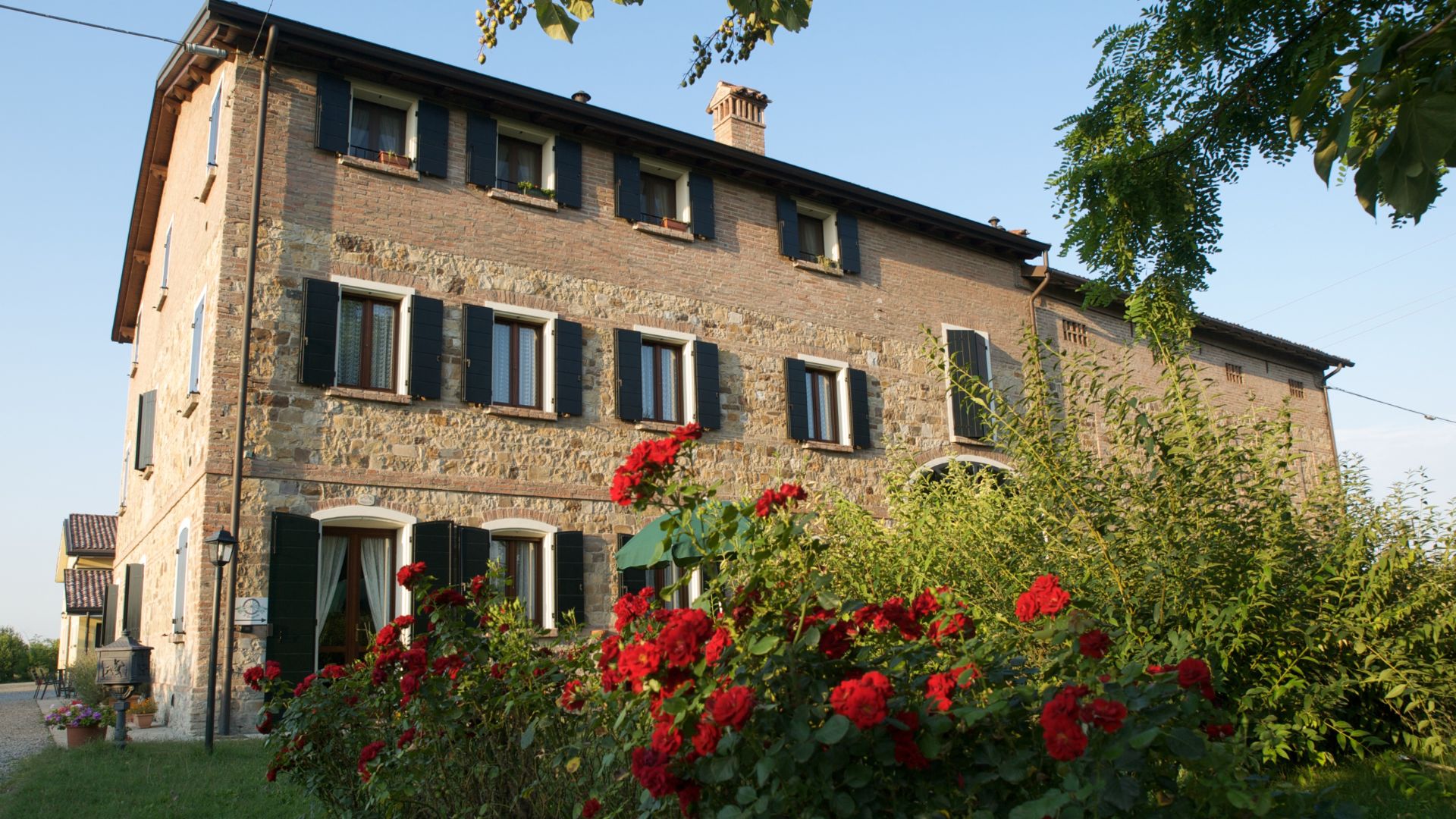
If you’re looking for completely independent apartments surrounded by greenery you really are in the right place here!
In fact, Brugnolo is immersed in the green nature of the Emilian countryside. For your relaxation, for that of your children, and again for the runs of your 4-legged friends, you will have 6000 square meters of park at your disposal!