
The rolling hills and mountains of Emilia conceal surprising natural treasures: unusually shaped rock formations that dominate the landscape and attract hikers and climbing enthusiasts. Some are famous and easily accessible, while others remain more hidden and offer an even more fascinating experience of discovery. Below, we present the most evocative ones.

Pietra di Bismantova (Reggio Emilia)
Located in the municipality of Castelnovo ne’ Monti, Pietra di Bismantova is an imposing rock massif shaped like a ship that stands isolated in the Reggio Apennines. Dating back to the lower Middle Miocene (about 15 million years ago), over the centuries it has amazed travellers and has even been celebrated by poets. First among them was Dante Alighieri, who was so impressed by it that he mentioned it in verses 26 and 27 of Canto IV of Purgatory. At the top is a vast grassy plateau from which you can enjoy a breathtaking view, while at the foot stands a 15th-century hermitage with precious frescoes from the 15th century. The area is rich in biodiversity and offers numerous hiking trails, including the Pietra di Bismantova Nature Trail, a circular route suitable for all that leads to its summit. There are also numerous climbing routes and two via ferrata routes.

Atticola Canyon in Vetto (Reggio Emilia)
Also in the province of Reggio Emilia, near Vetto (a town known for being a natural balcony on the right bank of the Enza River), you can admire an unexpected landscape that brings to mind an alien planet or one of the famous canyons overseas. We are talking about the Atticola Canyon, which is not actually a real canyon but a series of small volcanoes a few metres high, in an area of red and white coloured ferrous clay outcrops that almost look like sculptures. It is the perfect place for those seeking nature, silence and an unusual setting. In the Vetto area, there are numerous nature trails (ideal for trekking and mountain biking) that allow you to reach or explore the area around the Atticola Canyon.

Sassi di Varana (Modena)
In the Modena Apennines, in the locality of Varana Sassi and in the nearby hamlet of Pompeano (municipality of Serramazzoni), there are spectacular and rare rock formations of volcanic origin, dark green in colour, almost black, rich in iron and magnesium, on whose surface a rich vegetation grows. These are serpentine ophiolites resulting from magmatic effusions that occurred 200 million years ago. The Pompeano ophiolite, on which the castle of the same name stands, is crossed by a fault that has formed a cave approximately 30 metres long (open to the public only during the village festival, on the first Saturday and Sunday of August). The Varana ophiolite, on the other hand, is the ideal destination for rock climbing enthusiasts.

Sassi di Roccamalatina (Modena)
The Sassi di Roccamalatina (part of the municipality of Guiglia) are undoubtedly one of the most significant geomorphological features in the entire Emilian-Romagnolo Apennines. These are imposing sandstone spires (over 70 metres high) with steep walls that contrast sharply with the gentle surrounding landscape. Since ancient times (perhaps even during the Byzantine domination), they have been home to fortified settlements. Today, they are a historic nesting site for birds of prey and a wintering ground for the rare wallcreeper, protected by the nature park of the same name, which covers 2,300 hectares near the Panaro river valley. The park, characterised by a wide biodiversity of habitats, offers over 100 km of trails that can be explored on foot, horseback or bicycle. These range from simple walks to more complex hiking trails, as well as short via ferrata routes.

Devil’s Leaps (Parma)
In Alta Val Baganza, between the villages of Cassio, Chiastre and Casaselvatica, you can admire the spectacular peaks of the Devil’s Leaps, a vertical rock formation that will leave you speechless. They are the visible part of an ancient sedimentary formation, believed to date back to the Cretaceous period (80 million years ago). The name derives from a legend, according to which a hermit monk, who had retired to the area to pray, was tempted by the devil, who enticed him with promises of riches and earthly pleasures. However, the monk defended himself by showing a small crucifix, which caused the devil to flee. In his escape, Lucifer left his footprints imprinted in the ground, thus giving rise to the Devil’s Leaps. The site is crossed by several hiking trails, including the Via degli Scalpellini, the route that stonemasons used to follow in ancient times to reach the stone quarrying areas.
Foto © | Atticola Canyon in Vetto © JuzaPhoto | Sassi di Varana © In Appennino Modenese | Sassi di Roccamalatina © Visit Modena | Devil’s Leaps © Appennino Emilia
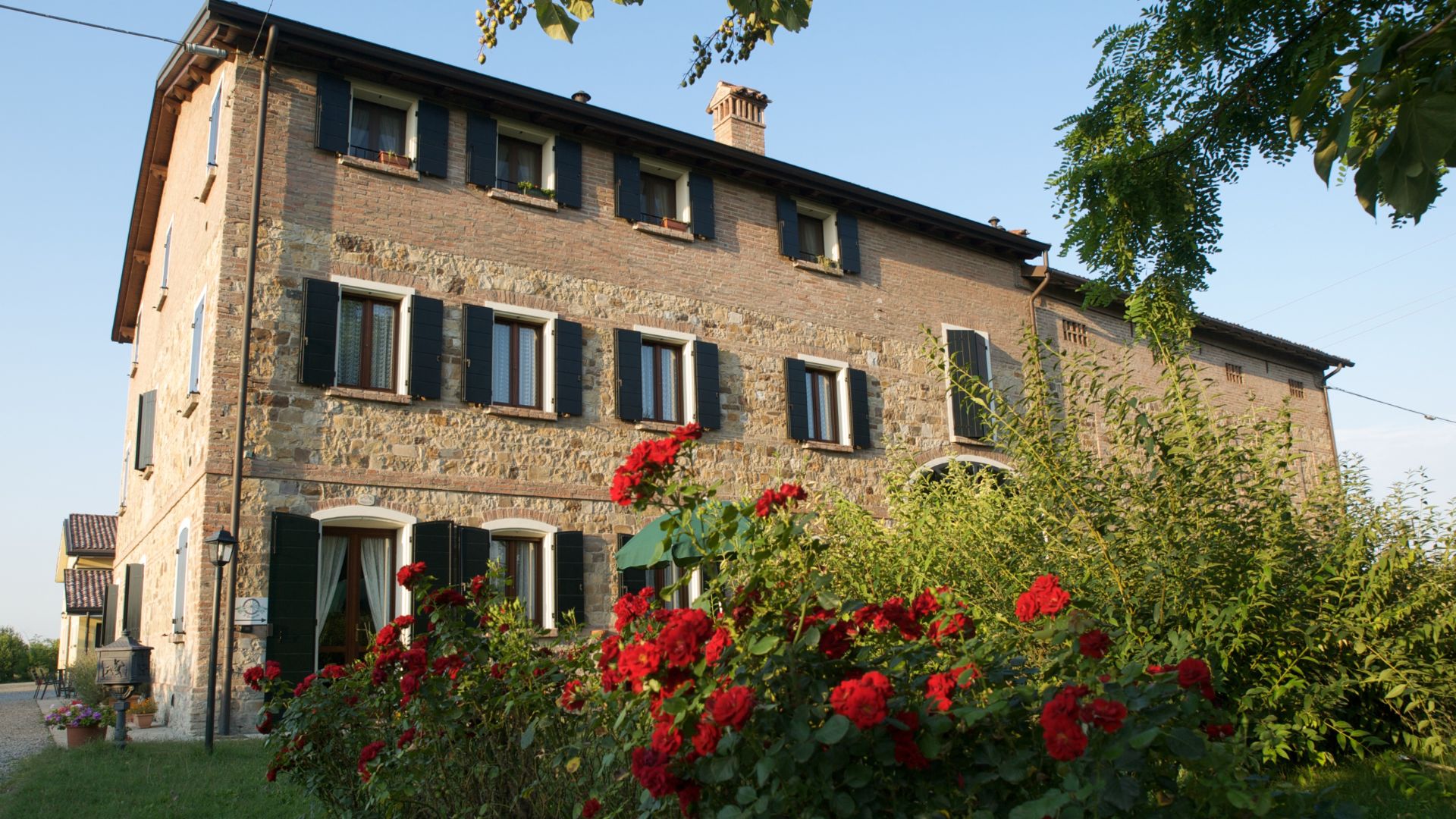
AGRITURISMO IL BRUGNOLO
Welcome to il Brugnolo
If you’re looking for completely independent apartments surrounded by greenery you really are in the right place here!
In fact, Brugnolo is immersed in the green nature of the Emilian countryside. For your relaxation, for that of your children, and again for the runs of your 4-legged friends, you will have 6000 square meters of park at your disposal!