When one thinks of Emilian Baroque, Bologna or Modena immediately spring to mind. Yet Reggio Emilia boasts an extraordinary Baroque heritage, often unknown even to the Emilian people themselves. Between the 17th and 18th centuries, the city was transformed into an open-air construction site: sumptuous churches, noble palaces with elegant façades and decorations celebrating the triumph of faith and power.
Here we present three Baroque masterpieces to see in Reggio Emilia. Visiting them means taking a journey into the artistic soul of the city, discovering places that still convey the expressive power and poetry of a unique period in the history of Emilian art.

Basilica of the Blessed Virgin of Ghiara
When discussing Baroque masterpieces in Reggio Emilia, we cannot fail to mention the Basilica of the blessed Virgin of Ghiara, one of the most artistic Marian shrines in Italy. Located along the ancient Corso della Ghiara, now Corso Garibaldi, it was built between the end of the 16th century and the beginning of the 17th century. Its construction was made possible thanks to donations from the faithful, following a miraculous event that took place on 29th April 1596: a young deaf-mute regained his hearing and speech after praying in front of an effigy of the Madonna located in the area. The interior of the basilica is a true masterpiece of Baroque art, with a wealth of decorations that bear witness to the devotion and artistic taste of the time. Of particular value is the extraordinary cycle of frescoes and altarpieces executed by the best artists of 17th-century Emilia, including Ludovico Carracci, Lionello Spada and Guercino. Today, the basilica is illuminated with technology that allows every golden glimmer and every brushstroke on the domes and ceilings to be observed.

Church of Christ
Located in the square of the same name, a few steps from the Basilica of the Blessed Virgin of Ghiara, the Church of Christ is a true Baroque gem. The building was constructed as an oratory (to preserve a miraculous fresco of the Holy Cross, painted in oil on plaster by an anonymous artist from Reggio Emilia during the plague of 1630-31) and later transformed into a church during the 18th century. It has a spectacular Baroque corner façade designed by Giovan Battista Cattani from Reggio Emilia, whose portal is surmounted by a shaped window with a balustrade and three marble statues by the Veronese sculptor Angelo Finali, representing the three virtues (Faith, Hope and Charity). The interior, also in Baroque style, consists of a single room, enriched with balustrades and elegant stuccoes. The altar, in 19th-century stucco, is the work of the Tondelli workshop.

Church of St Jerome and Vitale
The Church of St Jerome and Vitale is undoubtedly the most unique Baroque experience in the city. Located a few minutes’ walk from Reggio Emilia’s historic railway station, it was built in 1646 to a design by Gaspare Vigarani, a famous Baroque architect and set designer who also worked at the court of Louis XIV. Vigarani was also given authority over the artists of the minor arts, so that all the individual elements would correspond to his overall idea. It has a Baroque red brick façade, characterised in the lower part by three round arches with a portico and in the upper part by three large windows topped by a rectangular cornice. The interior is particularly original because it encompasses four intertwined buildings connected by a complicated maze of staircases and corridors: the Atrium, with the “Holy Stairs” of 28 steps; the Oratory of San Vitale; the Rotunda dedicated to Saints Simon and Jude, crowned by 18th-century statues by Pietro Ancini; and the Crypt with a reproduction of the Holy Sepulchre.
Photo Basilica of the blessed Virgin of Ghiara © comitato Basilica della Ghiara Tempio Della Ghiara | Church of Christ © PhotoVim – Wikipedia | Church of St Jerome and Vitale © PhotoVim – Wikipedia
AGRITURISMO IL BRUGNOLO
Welcome to il Brugnolo
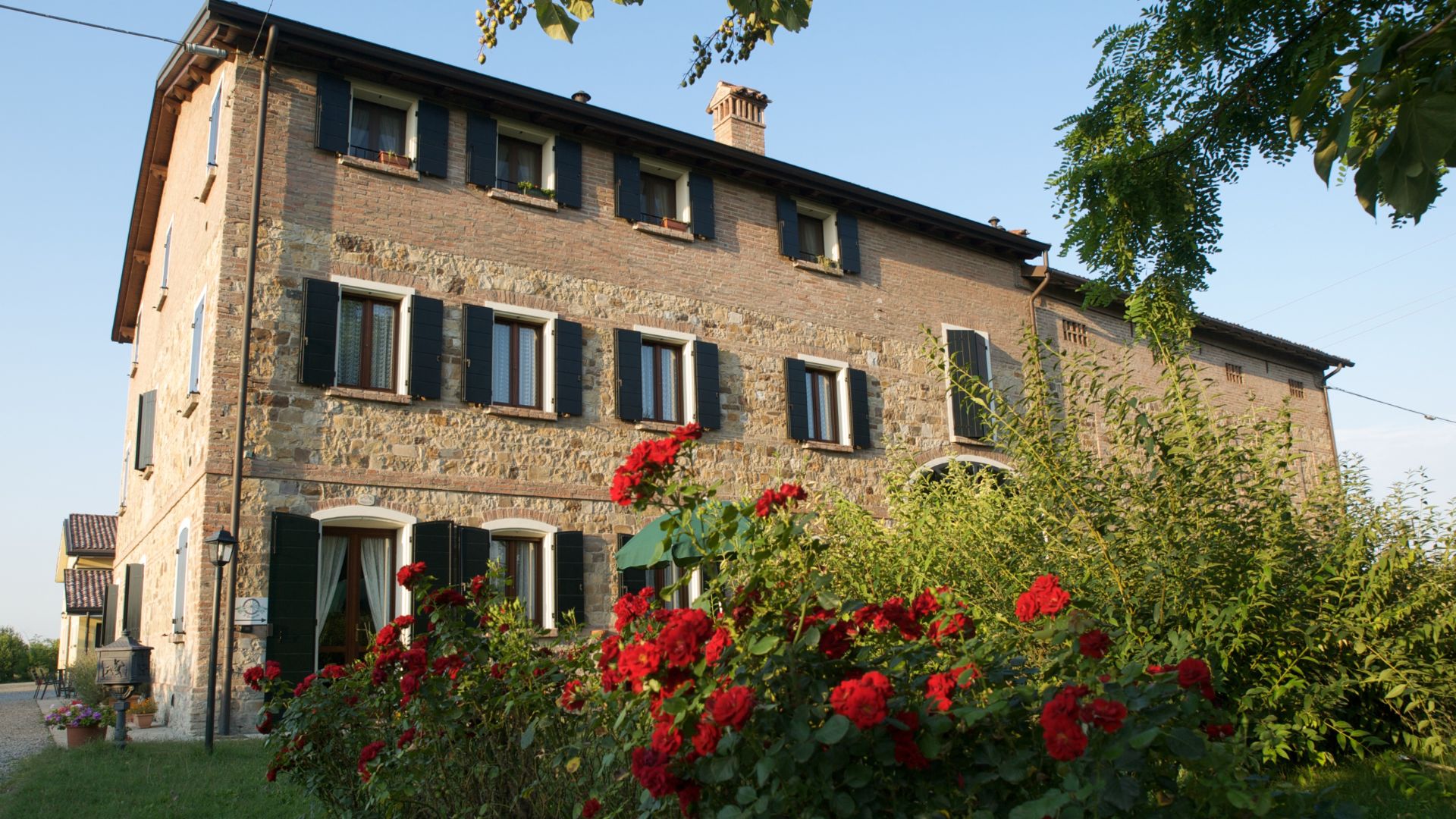
If you’re looking for completely independent apartments surrounded by greenery you really are in the right place here!
In fact, Brugnolo is immersed in the green nature of the Emilian countryside. For your relaxation, for that of your children, and again for the runs of your 4-legged friends, you will have 6000 square meters of park at your disposal!